Finding a silverfish in the bathtub at midnight tells you less about bugs than about moisture. These small, scaly insects move in where the air stays damp, the light stays low and there is paper, glue or starch to chew on. They do not bite and they do not carry disease, but they can slowly ruin books, photos, wallpaper and stored clothes. The good news is that silverfish are easy to read. Fix the conditions they need and their numbers drop on their own, with or without insecticide.
Silverfish are harmless to people but damage paper, glue and starched fabric. To get rid of them, dry the house out first: run a dehumidifier, fix leaks and vent bathrooms. Then clear out cardboard and old paper, vacuum cracks, set jar or sticky traps, and use diatomaceous earth or a silverfish-labeled bait only as the label directs.
What a silverfish bug actually is↑ Contents
A silverfish is a wingless insect, roughly 1/3 to 3/4 inch long, shaped like a flattened teardrop or a tiny carrot. The body is covered in shiny silver or pearl-gray scales that rub off if you crush one. Look for two long antennae at the front and three long, thin tails at the back. They run fast, in a wiggling motion that looks a bit like a fish swimming, which is where the name comes from.
They are night insects. During the day they hide in cracks behind baseboards, under sinks, inside wall voids and in stacks of boxes.
Silverfish live a long time for an insect. According to the University of Florida IFAS Extension, adult females can live two to five years depending on the species and lay up to 100 eggs, and the young take anywhere from three months to two years to reach adulthood. That slow life cycle means an infestation builds slowly and fades slowly.
Signs of silverfish in the house↑ Contents
You often find the damage before you see the insects. A fact sheet from Maine Board of Pesticides Control lists the evidence below. Check bookcases, closet shelves, storage boxes and the backs of wallpaper seams.
- Yellowish stains on paper or fabricFaint yellow marks on old documents, stored linens or the inside of boxes, often near feeding damage.
- Tiny dark droppingsSpecks that look like ground pepper, scattered along shelves, inside drawers or in the corners of boxes.
- Ragged edges and thin spots on paperSilverfish scrape the surface rather than biting clean through, so pages, book spines and labels look notched or worn thin. Heavily fed-on paper becomes tissue-like with irregular holes.
- Patches of glaze missing from wallpaperThey feed on the paste behind and on the surface, leaving dull, irregular patches.
- Damage to starched or natural fabricsSmall holes or worn spots in cotton, linen, silk or rayon, especially on clothes or drapes that sat in storage. Clothes moths cause similar holes, so look for other signs too.
- Shed scales and skinsSilverfish keep molting their whole adult life. A fine silvery dust or tiny papery skins in a drawer is a strong clue.
- Live insects in sinks and tubsThey slip in at night and cannot climb the smooth sides. Several every night means a breeding population nearby.
What attracts silverfish↑ Contents
Moisture is the big one. A second silverfish fact sheet from the same Maine program puts their preferred range at 75 to 95 percent relative humidity and 70 to 80°F. Most living spaces sit well below that humidity, which is why silverfish crowd into the few rooms that do not.
- Bathrooms. Daily showers, poor exhaust fans and slow drips under the vanity keep the air and the cabinet floor damp.
- Basements and crawl spaces. Cool walls, bare soil and seasonal water seepage keep humidity high for months at a time.
- Attics and roofs. A roof leak or poor ventilation can create a damp pocket overhead. Oregon State University notes that damp, moss-covered shake roofs can host silverfish that then move indoors.
- Cardboard and paper. Moving boxes, old magazines and newspaper stacks are food and shelter at the same time. The glue in cardboard seams is a favorite.
- Starchy foods. Flour, cereal, pasta and pet food in open bags or paper packaging.
- New construction or remodeling. Fresh plaster and drywall compound hold moisture while they cure, and large numbers can show up in a new addition.
Are silverfish harmful?↑ Contents
To people and pets, no. Silverfish do not bite or sting, and the Maine pest program fact sheet states plainly that they are not associated with spreading any disease. They are mainly a nuisance.
The harm is to your belongings. Mississippi State University Extension calls the damage relatively minor for most homeowners, but it adds up in the wrong place. Family photos, tax records or a wedding dress stored in a basement can be ruined over a few years. A steady silverfish population is also a moisture warning. The same dampness that feeds them also grows mold and rots wood.
The bigger health risk usually comes from the cure. Oregon State University warns that toxic residual insecticides and mothballs are a greater hazard than the insects, and that mothballs rarely work on silverfish anyway.
How to get rid of silverfish, step by step↑ Contents
Work in this order. The first four steps remove what silverfish need to survive, and in many homes they are enough on their own. Chemical treatments come last because they fail when the house stays damp.
-
Find where they are coming from
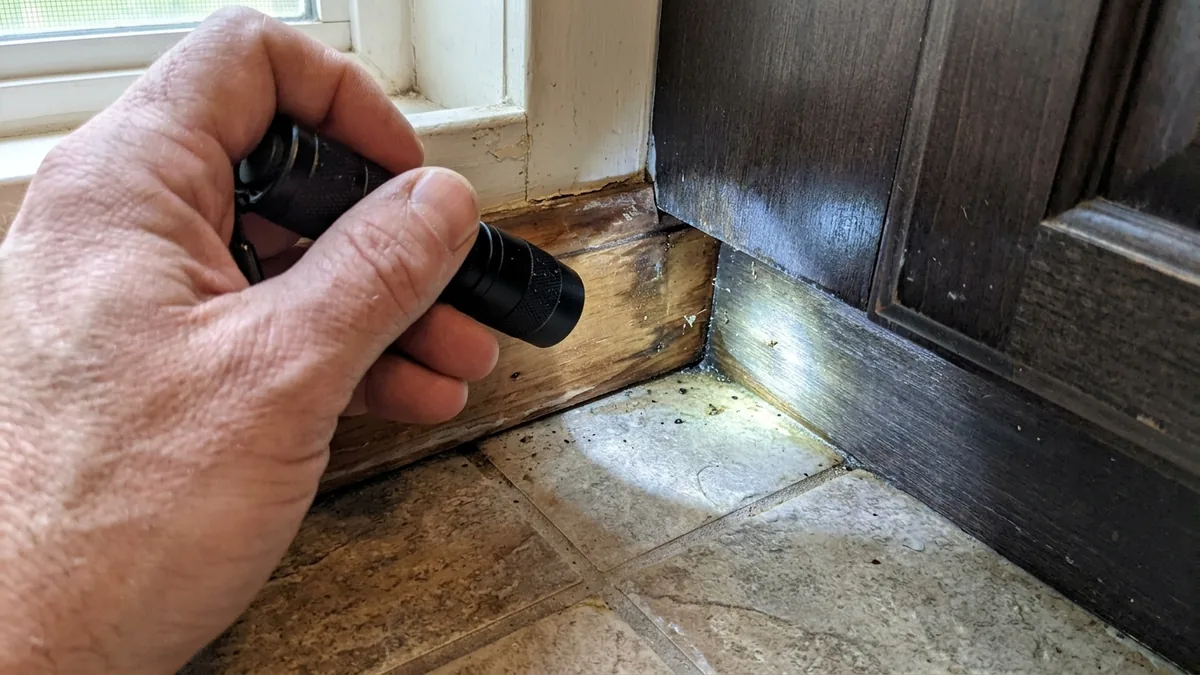
Spend one evening with a flashlight. Check under sinks, behind the toilet, along basement walls, in closets and inside storage boxes. Mark every spot where you see insects, droppings or damage. If you only find one or two insects in living areas, the source is probably elsewhere, such as a basement, crawl space or attic, so focus there.
-
Bring the humidity down
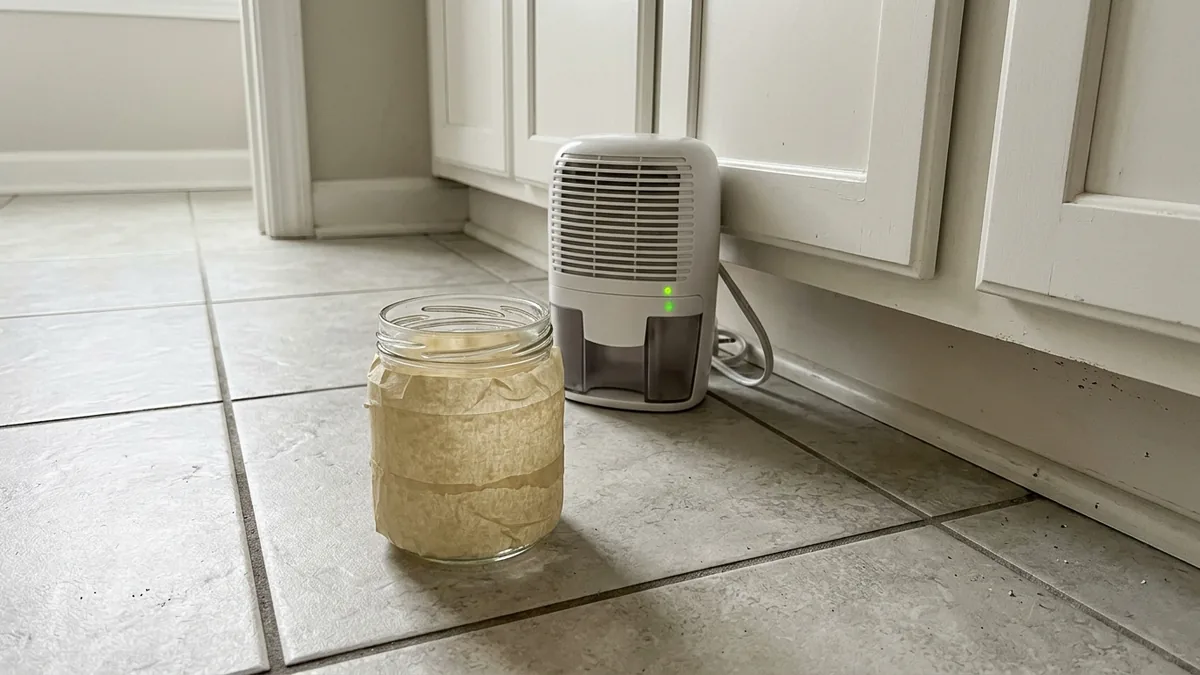
Put an inexpensive digital hygrometer in the problem room. Then run a dehumidifier in basements and other damp spaces and aim to keep relative humidity below 50 percent. That number is a practical household target, well under the 75 percent and up that silverfish prefer. Empty the bucket daily, or run the drain hose to a floor drain. In bathrooms, run the exhaust fan during every shower and for at least 20 minutes after. Leave closet doors open a crack so air can move.
Crawl space with bare dirt? A plastic vapor barrier over the soil cuts the moisture rising into the house. Oregon State University recommends it for silverfish problems.
-
Fix leaks and wet spots
Look for drips at sink traps, toilet supply lines, washing machine hoses and the water heater. Check for condensation on cold water pipes in summer and wrap them with foam pipe insulation. Outside, clean gutters and make sure downspouts discharge at least 4 to 6 feet from the foundation. Water pooling against the house ends up in the basement.
-
Declutter and seal up food
Get rid of old newspapers, magazines and unused cardboard boxes. Move anything you keep into lidded plastic bins, especially papers, photos and out-of-season clothes. Store flour, cereal, pasta and pet food in airtight containers. Wash stored clothes before packing them. Small items you suspect are infested can go in the freezer for several days.
-
Vacuum and seal cracks
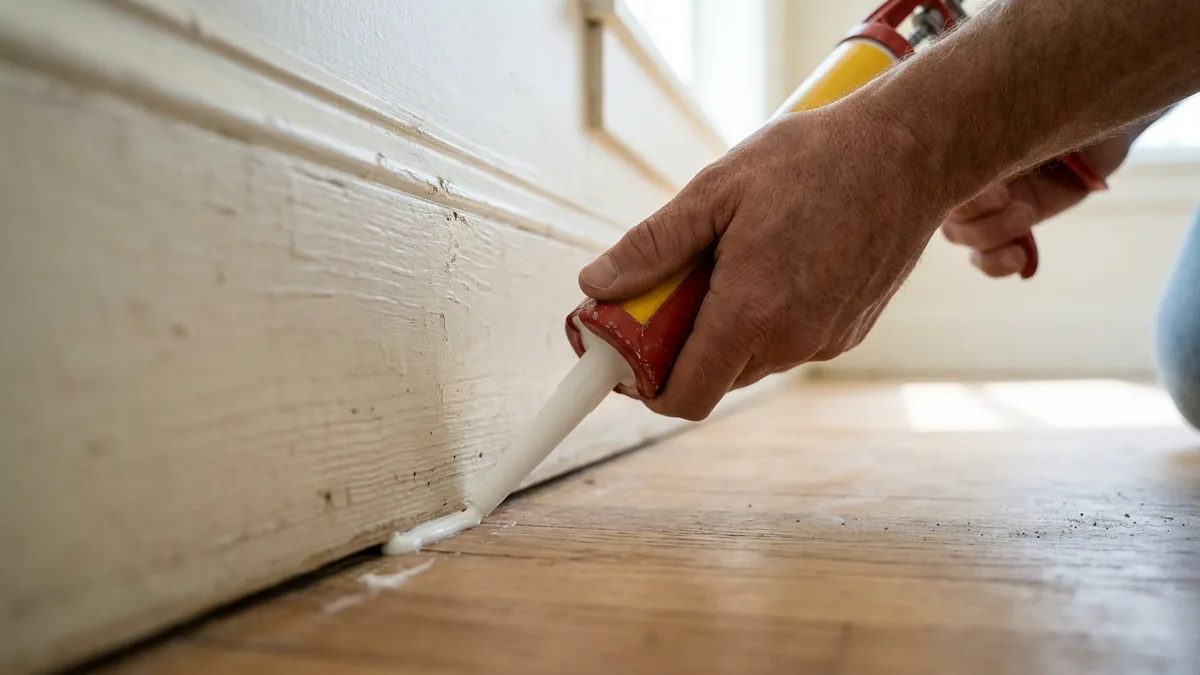
Vacuum along baseboards, inside closets, on bookshelves and in cabinet corners with a crevice tool. This pulls up insects, eggs, lint and the crumbs they eat. Empty the canister outside or seal the bag and throw it out. Then caulk gaps along baseboards, around pipes and around window and door trim.
-
Set traps to catch and monitor
The classic trap costs nothing. Wrap the outside of a small glass jar in masking tape so silverfish can climb up the rough surface, then they fall in and cannot climb the slick glass inside. Set the jars next to baseboards and in cabinet corners along the paths they travel. Sticky traps sold for insects work too. Check them every few days; the catch count shows whether your fixes are working.
-
Use diatomaceous earth correctly
Diatomaceous earth (DE) is a fine powder made from fossilized algae. It kills insects by pulling the oils from their outer layer so they dry out. The National Pesticide Information Center notes that it only keeps working while it stays dry and undisturbed. That is why DE alone fails in a wet bathroom.
Buy a product registered as an insecticide and labeled for indoor crawling insects, not pool filter DE. Pool-grade DE is processed differently and is not meant for this use. Apply a barely visible film into cracks, behind baseboards, under appliances and in wall voids, using a bulb duster. A thick white pile does not work better, because insects walk around it. Wear a dust mask while applying. Breathing DE irritates the nose and lungs, so keep it out of the open air where kids and pets play.
Boric acid dusts and silica gel dusts work the same way in cracks and voids. Oregon State University lists them among the least toxic options.
-
Choose baits or insecticides by the label
If numbers stay high after a few weeks, add a product labeled for silverfish. UF/IFAS Extension mentions fine granular baits and boric acid bait packs made for silverfish. Sprays labeled for indoor crack and crevice treatment can also work, though the Connecticut Agricultural Experiment Station notes that many need to contact the insects directly.
Read the whole label before you open the product. It is a legal document: it tells you where the product may go, how much to use and how long to keep people and pets away. Never apply pesticides in or around food storage or prep areas. Skip total-release foggers (“bug bombs”). They coat open surfaces while silverfish sit untouched deep in cracks. Keep oil-based sprays away from pilot lights, furnaces and electric motors.
Pesticide safety: keep every product in its original container and out of reach of children. If someone swallows a product or gets it in their eyes, follow the first aid steps on the label and call Poison Control at 800-222-1222. For questions about a specific product, the National Pesticide Information Center answers at 800-858-7378.
Expect a slow decline. You will keep seeing a few for a month or more after the house dries out. If trap counts stay high after two or three weeks, recheck the humidity before reaching for more chemicals.
When to call a pest control pro↑ Contents
Most silverfish problems are DIY jobs. Call a licensed pest control company when:
- You still find silverfish every night after six to eight weeks of dry conditions, decluttering and trapping.
- They show up in many rooms at once, including upper floors, which suggests a source inside walls, the attic or the roof.
- Valuable papers, books or collections are at risk and you cannot move them.
- You are not comfortable applying dusts into wall voids or electrical areas, or someone in the home has asthma.
- The real problem is water: a hidden plumbing leak, a wet crawl space or a failing roof. In that case a plumber, roofer or waterproofing contractor will do more than any exterminator.
Keeping silverfish from coming back↑ Contents
The Connecticut Agricultural Experiment Station points out that infestations take a long time to build, so steady housekeeping beats any one-time treatment. Make these habits:
- Watch the hygrometer. Keep basements and bathrooms below 50 percent humidity, especially in humid summer months.
- Run the bath fan every time. A fan on a timer switch takes the guesswork away.
- Use plastic, not cardboard, for storage. Lidded bins for papers, photos, books and seasonal clothing.
- Recycle paper as it arrives. Do not let newspapers and mail pile up in the basement or garage.
- Keep a couple of jar traps out. They are your early warning if the numbers start to climb again.
Silverfish: FAQ↑ Contents
Does one silverfish mean an infestation?
Not by itself. Many homes have a few silverfish that wander in from outside or a damp corner. If you see one now and then, dry out the area and set a jar trap. If you find several a week, along with droppings or paper damage, there is a breeding population nearby.
Do silverfish bite humans?
No. Silverfish have weak mouthparts made for scraping paper, glue and starch. They do not bite people or pets and are not known to spread disease.
What kills silverfish instantly?
A vacuum or a paper towel does the job for the ones you see. Contact sprays labeled for silverfish also kill on contact, but they do nothing for the insects hiding in walls. Lasting control comes from lower humidity, less clutter and a thin dust treatment in cracks.
Why do I keep finding silverfish in my bathtub?
Bathrooms are the most humid rooms in most homes. Silverfish come out at night to look for water and food, slip into the tub and cannot climb the smooth sides. Run the exhaust fan longer, fix any leaks under the sink and caulk gaps around the tub and pipes.
Does diatomaceous earth kill silverfish?
Yes, when it stays dry and sits as a thin film where they travel. Use a product labeled as an insecticide, apply it with a bulb duster into cracks and voids, and wear a dust mask. It works slowly, over several days, and fails in damp spots.
How long does it take to get rid of silverfish?
Plan on several weeks to a few months. Silverfish live for years and eggs keep hatching for weeks, so numbers drop gradually after you fix the moisture. Use trap counts to judge progress rather than single sightings.
A silverfish problem is really a moisture and clutter problem with legs. Keep humidity under 50 percent, fix leaks, swap cardboard for plastic bins and vacuum the edges of each room. Then use traps to monitor and a thin film of labeled diatomaceous earth or bait where they hide. Follow the label every time, and call a pro when the source is hidden in walls or the numbers will not drop.
Sources: University of Florida IFAS Extension, Silverfish, Maine Board of Pesticides Control, Silverfish, National Pesticide Information Center, Diatomaceous Earth, Connecticut Agricultural Experiment Station, Silverfish and Firebrats.