Fruit flies seem to appear out of thin air, but every one of them came from somewhere close: a soft banana, a forgotten onion at the back of the pantry, a sticky film in the bottom of the recycling bin, or a sour-smelling mop. Kill the adults and ignore that spot, and a fresh batch shows up a week later. This guide shows you how to find where they are breeding, build a vinegar trap that actually catches them, and break the cycle for good. It also covers how to tell fruit flies from drain flies and fungus gnats, because the fix for each one is different.
To get rid of fruit flies, find and remove the breeding source first: overripe produce, sticky trash and recycling bins, drains, wet mops and rags. Then set apple cider vinegar traps with a drop of dish soap to catch the adults. Keep cleaning and trapping for at least two weeks, since a new generation can develop in about a week.
Why fruit flies show up in your house↑ Contents
The common fruit fly is a tiny insect, about 1/8 inch long, with red eyes, a tan front half and a darker rear. It is not really after the fruit itself. It is after the yeast that grows on anything fermenting. Ripe fruit, spilled juice and the sludge in a garbage disposal all smell like a nursery to a fruit fly.
Most infestations start one of two ways. Either adults drift in through an open door or a torn screen, or eggs and larvae ride home on produce from the store or the garden. Late summer and fall are peak season.
What turns three flies into three hundred is the breeding speed. According to the University of Kentucky Entomology fact sheet, a female can lay about 500 eggs, and development from egg to adult takes about one week. The University of Wisconsin Extension puts the full fruit fly life cycle at 8 to 10 days. The eggs go near the surface of fermenting material, and the larvae feed right there. Any moist film of fermenting residue is enough, which is why a spotless-looking kitchen can still have a fruit fly problem.
Where fruit flies breed: check these spots↑ Contents
Finding the source is the whole job. Traps catch adults, but every source you miss keeps producing new ones. Grab a flashlight and go through this list room by room. If you have fruit flies in the kitchen and nowhere else, start at the counter and work outward.
- Fruit bowl and counter produceBananas, tomatoes, peaches and grapes are the usual starting point. Check the bottom of the bowl too: one split grape under the pile is enough.
- Pantry potatoes and onionsA single soft potato or a rotting onion in a dark bag can feed a large population for weeks. These are easy to miss because they sit out of sight. Squeeze each one.
- Recycling binSoda cans, beer bottles, wine bottles and old ketchup bottles all hold a sugary film. Wisconsin Extension specifically lists recycled bottles and cans as a breeding site. Rinse containers before they go in the bin.
- Trash can bottomJuice and syrup leak through bags and collect at the bottom of the can, where they ferment quietly. Lift the bag out and look.
- Kitchen drain and garbage disposalFood residue builds up under the disposal flaps and inside the drain pipe. If flies hover over the sink even when the counter is clear, suspect the drain.
- Mop, rags, sponges and the mop bucketA mop that smells sour is a breeding site. So is a dish rag left balled up wet overnight, or a bucket with an inch of dirty water in it.
- Under and behind appliancesSpilled juice under the refrigerator, an apple core that rolled behind the stove, or a fridge drain pan holding old water. Slide the appliance out if flies keep coming back.
Not sure if a drain is involved? Use the trick from the University of Kentucky fact sheet: tape a clear plastic food storage bag over the drain or disposal opening and leave it overnight. If you find flies trapped inside the bag in the morning, they emerged from that drain, and that drain needs cleaning.
A DIY fruit fly trap that works↑ Contents
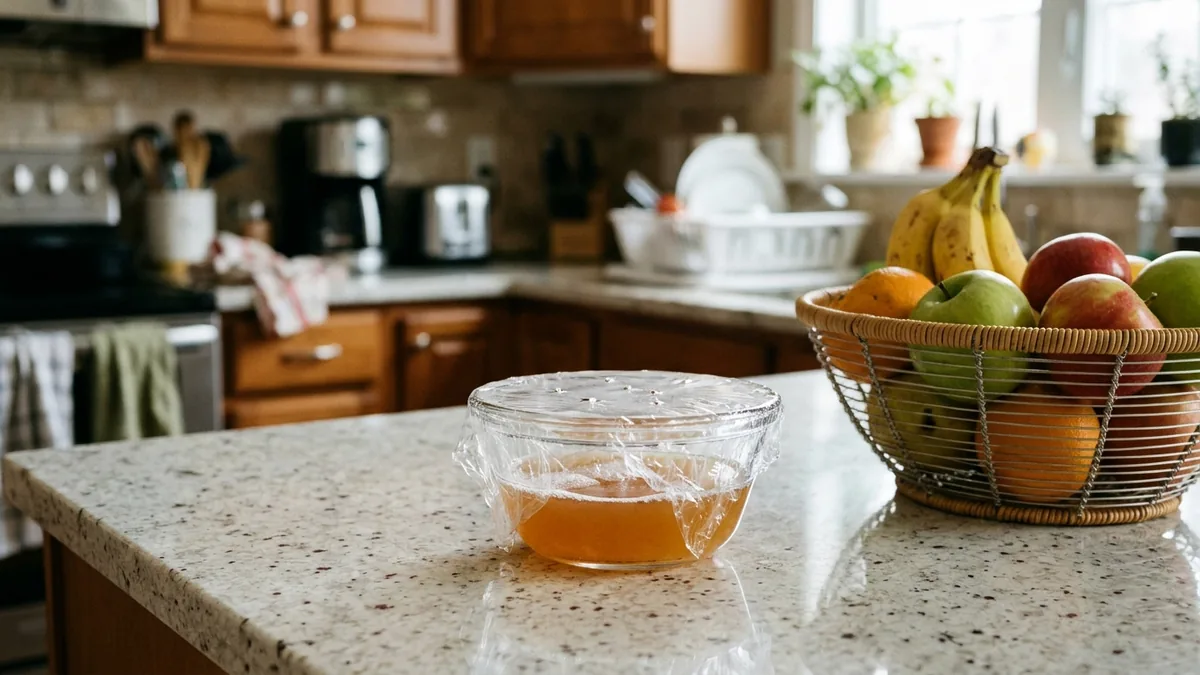
A homemade fruit fly trap costs almost nothing and works well, as long as you build it right. The two details people skip are the soap and the small entry hole. Without soap, flies land on the vinegar, drink and leave. Without a narrow entry, they fly back out.
-
Pick a small jar or glass
A mason jar, a juice glass or a small plastic cup all work.
-
Add apple cider vinegar
Pour in about 1/2 inch, or a few ounces, of apple cider vinegar. It works better than white vinegar because it smells like fermenting fruit. A splash of red wine or a piece of very ripe banana also works as bait.
-
Add one or two drops of dish soap
Just a drop. The soap breaks the surface tension of the liquid, so flies that touch it sink instead of standing on top. Texas A&M AgriLife recommends exactly this combination: apple cider vinegar with a few drops of soap. Do not stir it into foam, because bubbles give flies something to stand on.
-
Make a narrow entrance
Either stretch plastic wrap tight over the top and poke four or five holes with a toothpick, or roll a sheet of paper into a cone and set it in the jar with the narrow end pointing down, about 1/2 inch above the liquid. The cone is the version the University of Kentucky describes. Flies find their way down through the small opening but rarely find their way back up.
-
Place traps where you see flies
Put one next to the fruit bowl, one by the sink and one by the trash or recycling. Keep them out of reach of kids and pets. Replace the bait every three to five days, or sooner if it fills up, because a trap full of dead flies stops attracting new ones.
One honest word on traps: they are for monitoring and cleanup, not a cure. A trap catching dozens of flies every day means there is still an active breeding site nearby. Wisconsin Extension calls jar traps short-term control and is clear that removing breeding sites is the only way to completely stop the problem.
Breaking the fruit fly life cycle: a 14-day plan↑ Contents
Since one generation takes roughly a week, eggs and larvae already in hidden spots will keep producing adults for several days after you clean. That is why people think the problem came back. It did not come back; it was never fully gone. Plan for two full weeks.
- Day 1: the big cleanout
Go through every spot on the breeding list. Throw out or refrigerate all ripe produce. Empty and wash the trash and recycling bins with hot soapy water. Wash or replace the mop head, rags and sponges. Wipe sticky spots on counters, floors and inside cabinets. Set three or four vinegar traps.
- Day 2: drains
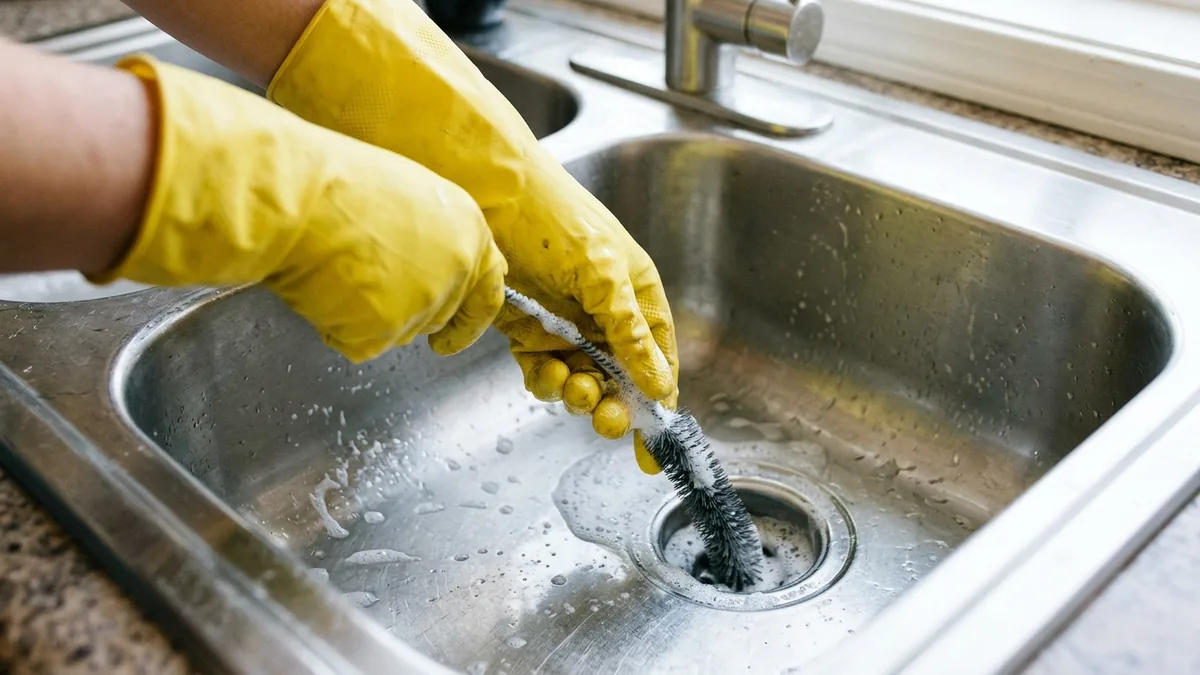
Scrub the kitchen drain and garbage disposal with a stiff drain brush to remove the slime coating the inside of the pipe. Flush with hot water. Do the bag test on any drain you are unsure about.
- Days 3 to 7: daily routine
Take out food trash every evening. Keep produce in the fridge or in a covered container. Rinse every bottle and can before recycling. Count the flies in the traps each morning. The numbers should drop steadily.
- Day 7 to 8: checkpoint
This is when any eggs you missed will have become adults. A small bump in trap catches is normal. A big one means there is still a source: check potatoes, onions, under appliances and the fridge drain pan.
- Days 8 to 14: finish the job
Keep the same routine and fresh bait in the traps. By the end of the second week, with no active sources, catches should be at or near zero.
Fruit flies vs drain flies vs fungus gnats↑ Contents
If a vinegar trap catches nothing while small flies keep buzzing around, you may not have fruit flies at all. Three tiny flies cause most indoor complaints, and each one breeds in a different place.
-
Fruit flies
Looks like: a tiny house fly, about 1/8 inch, tan to brown body, often bright red eyes.
Hangs out: around fruit, trash, recycling, wine glasses and the kitchen sink.
Breeds in: fermenting produce, sugary residue, drains and sour mops.
Fix: remove the fermenting source, then trap with vinegar.
-
Drain flies (moth flies)
Looks like: a miniature moth. Fuzzy, gray to black, with wide hairy wings held like a roof over the body.
Hangs out: on bathroom walls, tubs, shower stalls and near sinks. Weak fliers that hop a few feet and land again.
Breeds in: the gelatinous slime inside drains, traps and overflow holes, plus condensate lines and septic areas, according to NC State Extension.
Fix: scrub the pipe with a stiff long-handled brush to physically remove the slime. Vinegar traps barely touch them.
-
Fungus gnats
Looks like: a tiny, slender, dark mosquito with long legs and antennae.
Hangs out: around houseplants, running across the potting soil, on windowsills and drawn to lit screens at night.
Breeds in: damp potting soil, where the larvae feed on fungi in decaying organic matter. Iowa State University Extension points to overwatered houseplants as the most common source.
Fix: let the soil dry between waterings, or repot the plant in fresh soil.
Sprays, bleach and other shortcuts↑ Contents
Indoor fly sprays with pyrethrins will knock down the adults flying at that moment. Wisconsin Extension notes that they give no residual control, so the next batch of adults emerging from a hidden source the next day is not affected. If you use one after the sources are gone, follow the label exactly, keep it away from food and dishes, and air out the room.
Never mix drain products. NC State Extension warns that rinsing a drain with bleach after using a caustic drain cleaner can release toxic chlorine gas. Use one product at a time, flush with plenty of water in between, and keep the room ventilated.
Bleach alone does little. Pouring bleach down a drain runs straight past the slime layer where larvae live. Mechanical scrubbing with a drain brush is what removes it.
If flies persist for more than three or four weeks after a thorough cleanout, the source may be somewhere you cannot reach: a broken pipe under the floor, a cracked drain line, food-contaminated water trapped under loose tiles, or a dead rodent in a wall. That is the point to call a licensed pest control company or a plumber.
How to keep fruit flies out↑ Contents
Once the house is clear, keeping fruit flies out of the house is mostly a matter of habits:
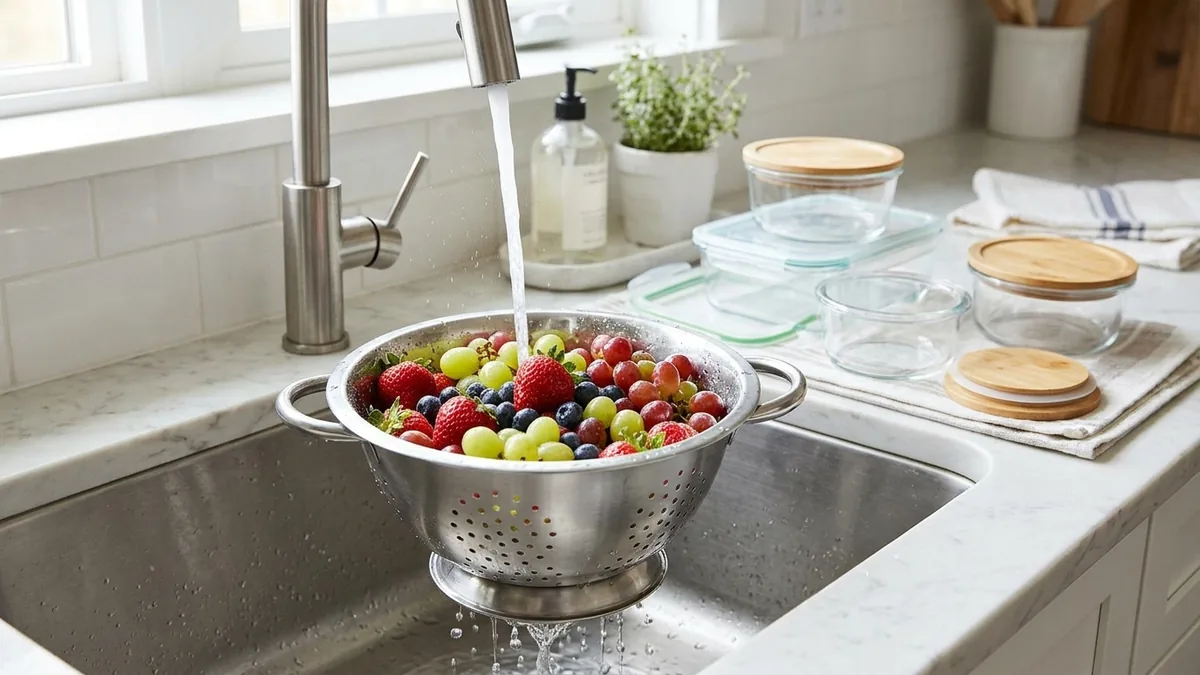
- Refrigerate ripe produce. Bananas can stay out, but move tomatoes, peaches and grapes to the fridge once ripe, and eat or toss soft fruit within a day or two.
- Rinse before recycling. A quick rinse of every can and bottle removes most of the attraction. Wash the bin itself every few weeks.
- Empty the kitchen trash often. In summer, take food waste out daily or keep it in a lidded container.
- Dry the mop and rags. Hang them to dry after every use and wash them on hot each week.
- Brush the kitchen drain monthly. Run the disposal with plenty of cold water and scrub under the rubber flaps.
- Fix screens. The University of Kentucky recommends tight-fitting 16-mesh screens on windows and doors.
Fruit flies: FAQ↑ Contents
How do I get rid of fruit flies fast?
Remove every piece of overripe produce, take out the trash and recycling, and wipe all sticky surfaces the same day. Then set two or three apple cider vinegar traps with a drop of dish soap. You will see a big drop within a few days, but keep going for two weeks to catch the generation already developing.
Why do I still have fruit flies after cleaning?
Either a breeding site was missed, or eggs laid before you cleaned are still hatching. Check the less obvious spots: pantry potatoes and onions, the bottom of the trash can, the garbage disposal, the fridge drain pan and the mop. Tape a plastic bag over drains overnight to see if flies are coming from there.
What is the best homemade fruit fly trap?
A small jar with about half an inch of apple cider vinegar, one or two drops of dish soap, and either plastic wrap with small holes or a paper cone on top. Change the bait every few days and place the trap right where the flies gather.
How long do fruit flies live?
For pest control, the number that matters is not adult lifespan but development time: about a week from egg to adult, and 8 to 10 days for the full cycle. With a female laying around 500 eggs, that speed is why a small problem can become a big one within two weeks.
Are fruit flies harmful?
They do not bite and are mainly a nuisance. The University of Kentucky notes they can carry bacteria and other disease-causing organisms onto food, so throw out any food you find larvae in and wash fruit before eating it.
Do fruit flies come from drains?
They can. Fruit flies breed in the food film inside kitchen drains and garbage disposals. Small fuzzy flies near bathroom drains are more likely drain flies. In either case, scrubbing the inside of the pipe with a brush works better than pouring chemicals down it.
Getting rid of fruit flies comes down to one rule: find where they breed and take it away. Clean out ripe produce, the recycling, the trash can, the drain and the mop, set apple cider vinegar traps to catch the adults, and keep at it for two weeks so the fruit fly life cycle runs out. If the flies look fuzzy or rise from plant soil, switch to the drain or houseplant fix instead.
Sources: University of Kentucky Entomology, Fruit Flies (EF621), University of Wisconsin Extension, Fruit Flies in the Home, NC State Extension, Drain Flies, Iowa State University Extension, Fungus Gnats in Houseplants.