A furnace not turning on on the first cold night of the season is rarely a dead furnace. Most of the time it is something small: a thermostat sitting in the wrong mode, a tripped breaker, a filter so clogged that the system shuts itself down, or a safety switch doing exactly what it was built to do. Most of these checks take a few minutes and cost nothing. This guide walks through them in the same order a heating technician would, so you either get the heat back tonight or call the pro with a clear idea of what is wrong.
When a furnace won’t turn on, start with the thermostat (Heat mode, set about 5°F above room temperature, fresh batteries), then check the breaker, the furnace power switch, the blower door panel and the air filter. If the furnace tries to start and then quits, count the blinking light code, then look at the flame sensor, the vent pipes and the condensate drain. If you smell gas, leave the house before doing anything else.
Safety first: when to stop right away↑ Contents
Everything in this guide is safe for a homeowner with a flashlight and a screwdriver. A few situations are not, and they come before any troubleshooting.
Smell of gas (rotten eggs): do not touch light switches, the thermostat or the furnace switch. Get everyone outside, then call your gas utility or 911 from outside the house.
Carbon monoxide alarm sounding: leave the house and call 911. Do not restart the furnace until it has been inspected.
Scorch marks, melted wires or a burning smell around the unit: turn the furnace off at the switch and call a technician.
One more rule worth keeping: never bypass a safety switch to “test” the furnace. Jumping a limit switch or a pressure switch removes the protection that keeps flames and exhaust gases where they belong. The U.S. Consumer Product Safety Commission recommends a carbon monoxide alarm in the hallway near every sleeping area for exactly this reason.
What your furnace is telling you↑ Contents
“Not turning on” can mean five different things. Stand next to the furnace for a full minute after you raise the thermostat, and note what you hear and see. That one minute of watching narrows the problem faster than anything else.
- Nothing at all: no hum, no click, no light on the boardThe furnace has no power. Check the breaker, the service switch and the blower door panel (checks 2, 3 and 4).
- Thermostat screen is blankDead batteries, or the thermostat is not getting its low-voltage power from the furnace (check 1).
- A small motor hums for a while, then everything stopsThat is the inducer fan. If ignition never follows, the pressure switch is not closing: think blocked vent pipe or clogged condensate drain (checks 7 and 8).
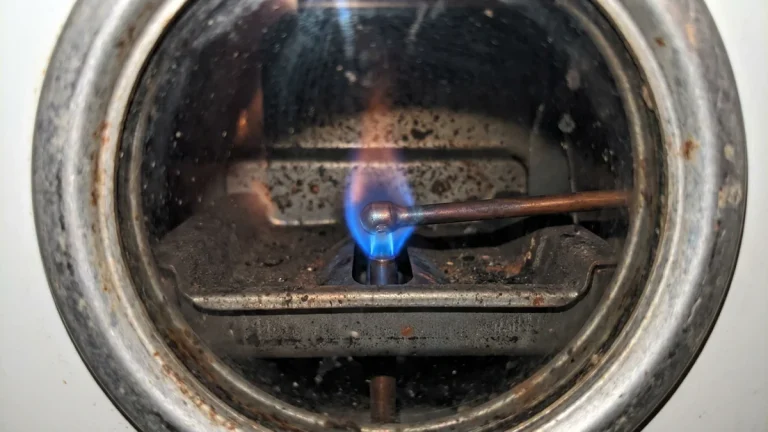
- Burners light, then shut off after 3 to 10 seconds, over and overClassic dirty flame sensor (check 10).
- Blower runs but blows cold airThermostat fan set to ON instead of AUTO, or the furnace has locked out after failed ignition and is only running the fan (checks 1 and 9).
- Tries three times, then gives upThe control board has gone into lockout. Read the light code before you cut power (check 9).
10 checks when your furnace won’t turn on↑ Contents
Work through these in order. The first five solve the large majority of no-heat calls, and none of them require opening anything more than the filter slot or the front panel.
-
Check the thermostat settings and batteries
Confirm the thermostat is set to Heat, not Cool or Off, and raise the setpoint about 5°F above the current room temperature so the call for heat is obvious. Set the fan to Auto. If the screen is dim or blank, replace the batteries even if they are “only” a few months old. Smart thermostats deserve one extra look: an active schedule, an eco mode or a lost Wi-Fi connection can quietly override what you just set.
If the thermostat has no batteries and the screen is blank, it gets its power from the furnace. A blank screen then points back to the furnace itself, usually power or a tripped float switch (check 8).
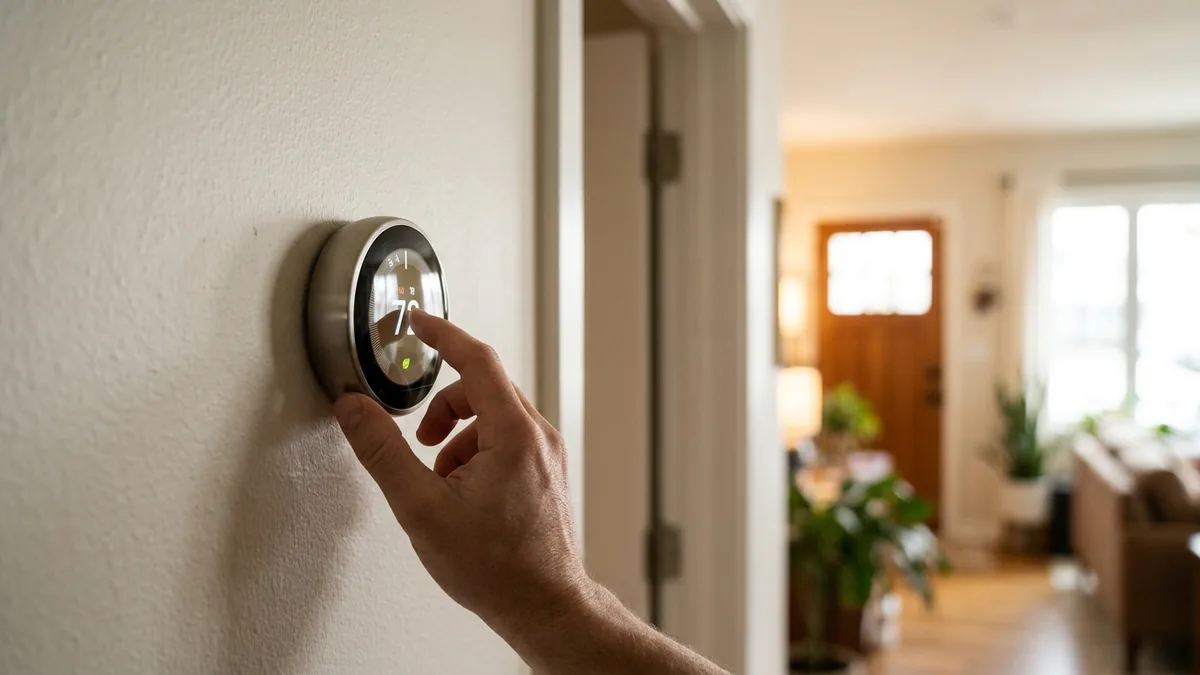
Set the thermostat to Heat and a few degrees above room temperature. -
Look for a tripped breaker or blown fuse
Go to the electrical panel and find the breaker labeled furnace, heat or HVAC. A tripped breaker sits in the middle position or slightly off. Push it fully off, then back on. If it trips again right away or within a few minutes, leave it off. A breaker that keeps tripping means a short or a failing motor, and that is a job for a technician or an electrician.
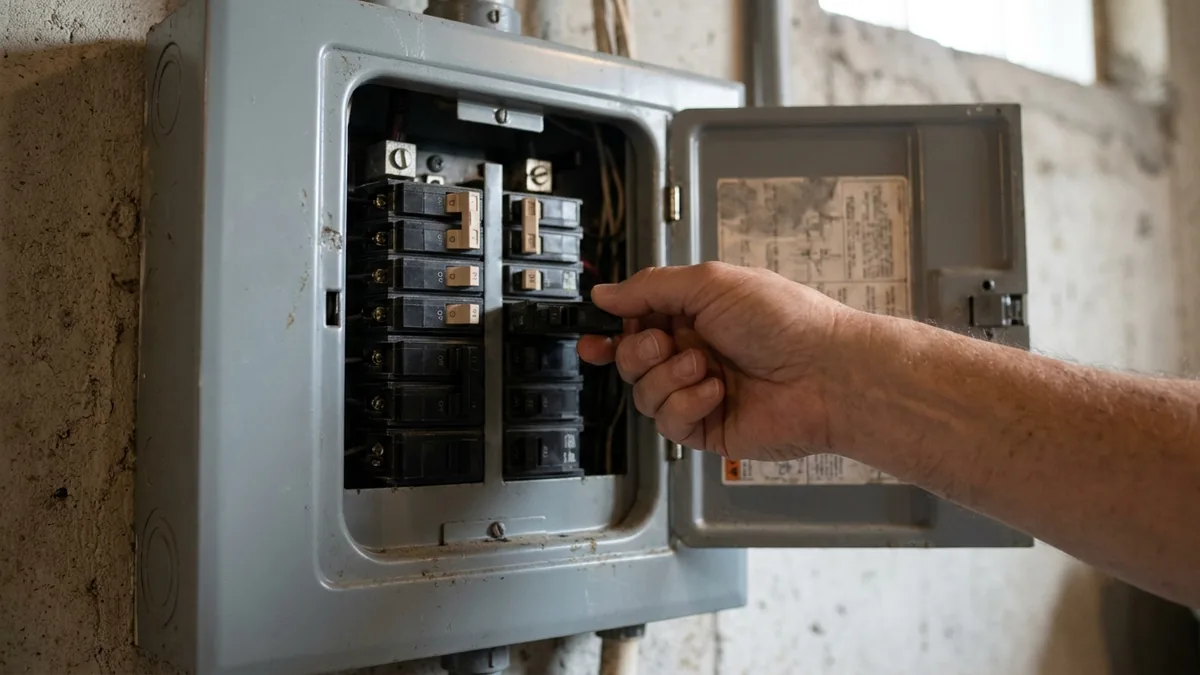
A tripped breaker in the panel is a common reason a furnace stays off. -
Flip the furnace service switch
Most furnaces have a switch on the unit or on the wall nearby that looks exactly like a light switch. Because it looks so ordinary, it gets turned off by accident all the time, especially in basements where it sits next to the stairway lights. Make sure it is on.
-
Seat the blower door panel properly
Behind the lower front panel there is a small push-button safety switch. If the panel is crooked or not fully pressed in, the furnace will not run at all. This catches a lot of people right after a filter change. Remove the panel, set it back on its tabs, and press it firmly until it sits flush.
-
Replace a clogged air filter
A filter packed with dust starves the furnace of airflow. The heat exchanger overheats, the high-limit switch opens, and the burners shut down to protect the system. After a few of those cycles, many furnaces lock out completely. Pull the filter and hold it up to a light. If you cannot see light through it, replace it, and check the arrow so the new one points toward the furnace.
ENERGY STAR advises checking the filter every month during heavy-use seasons and changing it at least every three months. Homes with pets or ongoing renovation work often need it sooner.
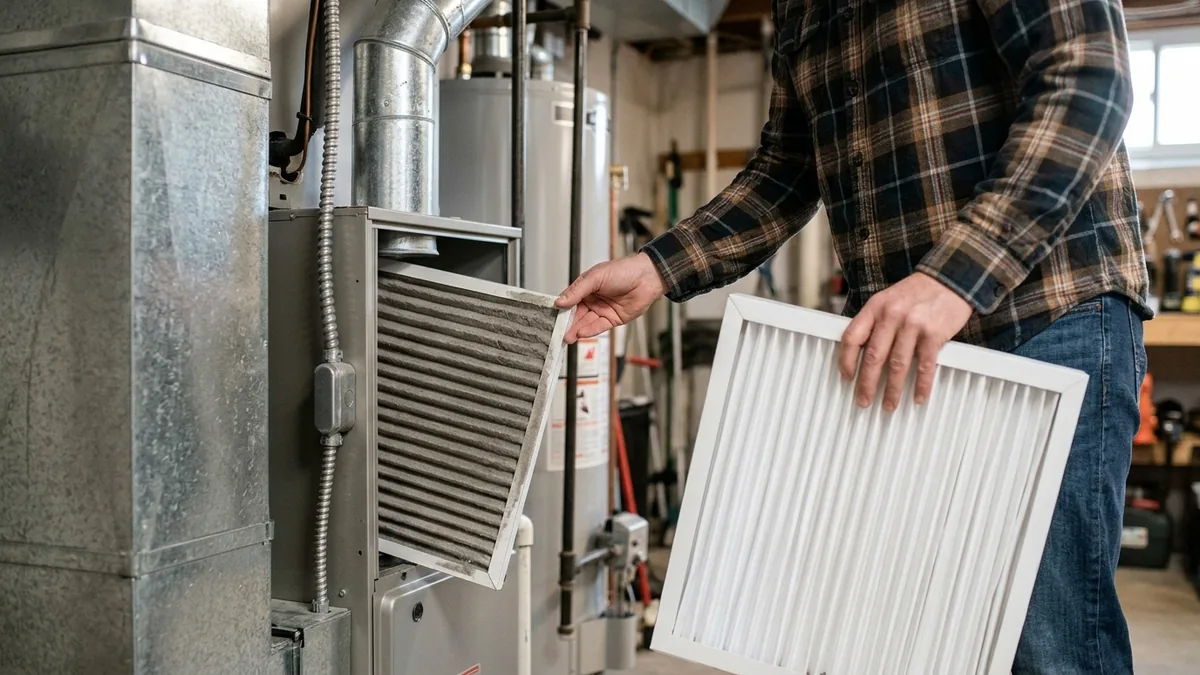
A clogged filter can shut the furnace down, so replace it before calling for service. -
Confirm the gas supply
Find the gas shutoff valve on the pipe that enters the furnace. When the handle runs parallel to the pipe, the valve is open; when it sits across the pipe, it is closed. Then check whether other gas appliances work. If the stove burners won’t light either, the problem is upstream: a utility shutoff, an unpaid bill, or an empty propane tank. Call the gas company in that case rather than opening anything on the furnace.
-
Clear the intake and exhaust pipes
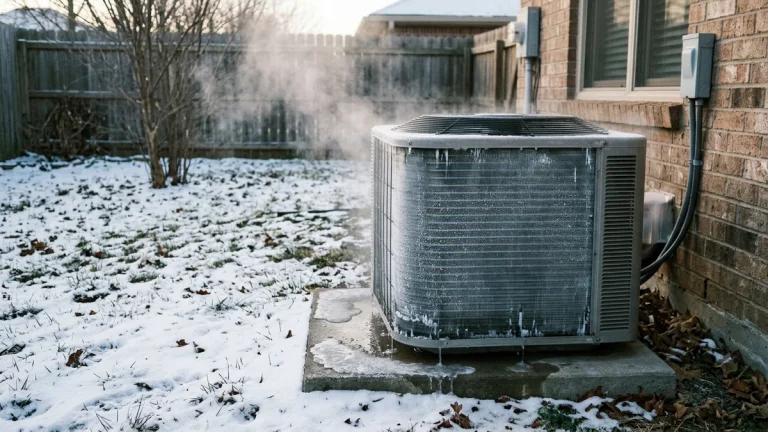
High-efficiency furnaces vent through two white plastic pipes that run out the side wall or the roof. Snow, ice, leaves, a bird nest or even a wasp nest can block them. When that happens, the pressure switch never closes and the furnace refuses to light, which is exactly what it should do. Go outside, look at both pipe openings and clear anything you can reach safely by hand. After a heavy snowfall, this is the first thing to check.
-
Check the condensate drain and pump
The same high-efficiency furnaces produce water as they burn gas, sometimes several gallons a day in deep winter. That water drains through a small trap and hose, often into a little pump with a reservoir. If the trap clogs or the pump fails, a float switch shuts the furnace off to prevent a flood. Signs include water around the base of the furnace or a pump reservoir that is full to the top. Flushing the hose with warm water or clearing it with a wet-dry vacuum usually brings the furnace back.
-
Read the blinking light code
Most furnaces built in the last 25 years have a control board with an LED you can see through a small window in the lower panel. When something fails, the board flashes a pattern: one flash, two flashes, three short and one long, and so on. Count the pattern a few times, then match it to the chart printed on the inside of the furnace door.
Write the code down or film it on your phone before you cut power. On many boards, turning the furnace off clears the stored code, and that number is the most useful thing you can give a technician. Codes differ from brand to brand, so trust the chart on your own furnace over any generic list online. Manufacturer guides such as Trane’s furnace troubleshooting page are a good second reference.
-
Clean the flame sensor
The flame sensor is a thin metal rod that sits in front of the burners and confirms that a flame actually lit. Over time it picks up a light coating that blocks the signal. The furnace lights, sees “no flame,” and shuts the gas off a few seconds later. It usually tries three times, then locks out.
To clean it: turn off the power at the service switch and close the gas valve, then give the burners time to cool. The sensor is held by a single screw and has one wire. Slide it out, polish the rod gently with fine steel wool or a non-scratch scouring pad until it looks clean, and put it back exactly as it was. Skip coarse sandpaper, which can leave grit and scratches. If the sensor is cracked or bent, replace it rather than cleaning it.
Not comfortable opening the burner compartment? Stop at check 9. Telling a technician “burners light for five seconds and go out” gets you a short, cheap visit.
-
Reset the furnace once
With everything above checked, turn the service switch off, wait about a minute, and turn it back on. Then raise the thermostat and watch the startup: inducer fan first, then a click, then the igniter glowing or sparking, then the burners, and after a short delay, the blower. If the furnace makes it through that whole sequence, you are done. If it locks out again, do not keep resetting it. The repeated failure is information, and the next step is a professional.
Older furnaces, oil burners and electric units↑ Contents
Standing pilot light furnaces
Furnaces from the 1990s and earlier often use a small flame that burns all the time. If that pilot is out, the main burners cannot light. The relighting steps are printed on a label near the gas valve, and you should follow them exactly. If the pilot lights but will not stay lit after you release the knob, the thermocouple is the usual suspect, and that is a quick part swap for a technician.
Oil furnaces
Oil burners have a red reset button on the burner control. Press it once. If the burner does not fire, leave it alone and call for service. Pressing the reset button over and over can pump oil into the combustion chamber, and that oil can ignite all at once on the next start.
Electric furnaces
Electric furnaces skip the gas, flame and venting steps entirely. They often run on two or more breakers, so check every breaker tied to the furnace, then the filter and the thermostat. Past that point you are dealing with 240-volt heating elements and relays, which is not DIY territory.
When to call an HVAC pro↑ Contents
Call a licensed technician if any of these apply after your checks:
- The breaker trips again after one reset.
- The furnace locks out again after you cleaned the flame sensor and replaced the filter.
- The igniter does not glow or spark at all, or you can see a crack in it.
- The inducer motor stays silent, or it hums loudly without spinning.
- You see flames reaching outside the burner area, soot, or rust and water dripping inside the cabinet.
- The light code points to a gas valve, rollout switch or control board problem.
Before the visit, take a photo of the furnace’s rating label (model and serial number), note the blink code and describe the startup sequence you observed. A technician who knows “inducer runs, no ignition, three flashes” before arriving often brings the right part on the first trip.
How to keep it from happening again↑ Contents
Most no-heat emergencies are maintenance problems that showed up on a cold night. A short routine removes most of them:
- Filter on a schedule. Check it monthly in winter and replace it at least every three months, more often with pets.
- Test the heat before you need it. Run the furnace for 15 minutes on a mild day in early fall. Problems show up while you still have time to fix them.
- Annual professional tune-up. Both ENERGY STAR and the CPSC recommend a yearly inspection of fuel-burning heating equipment, including the flue and vent pipes.
- Keep registers and returns open. Closing too many vents reduces airflow and can trip the high-limit switch just like a dirty filter.
- Clear outdoor vent pipes after storms. Make it part of shoveling the driveway.
- Working CO alarms. Test them monthly and replace the batteries when you change the clocks.
Furnace not turning on: FAQ↑ Contents
Why is my furnace not turning on when the thermostat is on?
A working thermostat screen only proves the thermostat has power. The furnace can still be stopped by a tripped breaker, a service switch turned off, a loose blower door, a clogged filter or a safety switch such as the condensate float switch. Go through checks 2 to 8 and watch what the furnace does when the thermostat calls for heat.
Is there a reset button on a gas furnace?
Most modern gas furnaces have no single reset button. You reset them by turning the service switch off for about a minute and back on. Some units have a small red button on a rollout switch near the burners. If that button has tripped, flames escaped where they should not, so call a technician instead of resetting it yourself.
Can a dirty filter stop a furnace from turning on?
Yes. A clogged filter makes the furnace overheat, the high-limit switch shuts the burners off, and after several cycles many control boards lock the furnace out completely. Replacing the filter and resetting the power once often brings the heat back.
Why does my furnace turn on, then shut off after a few seconds?
When the burners light and go out within roughly 3 to 10 seconds, the flame sensor is usually not detecting the flame. Cleaning the sensor rod solves it in most cases. If the problem continues after cleaning, the sensor may be worn, or the furnace may have a grounding issue that a technician should check.
How long should I wait after resetting my furnace?
Give it a few minutes. Most furnaces run the inducer fan first to clear the combustion chamber, then ignite, then wait before starting the blower. If nothing happens after about five minutes and the light is flashing a code, the furnace has locked out again.
How do I stay warm safely until the furnace is fixed?
Use electric space heaters plugged straight into a wall outlet, never into an extension cord, and keep them at least 3 feet from beds, curtains and furniture. Never heat the house with a gas oven, a grill or a generator indoors. Let faucets on outside walls drip slightly if the temperature drops below freezing to protect the pipes.
A furnace not turning on is usually telling you something specific, and the fix is often a filter, a switch or a few minutes with a flame sensor. Work from the thermostat down to the burners, read the blink code before you cut power, and stop the moment you smell gas or hit a breaker that keeps tripping. Whatever you find, you will either have heat again or a precise description for the technician, and that alone saves time and money.
Sources: ENERGY STAR maintenance checklist, U.S. CPSC on annual furnace inspection and CO alarms, Trane gas furnace troubleshooting.