
A heat pump blowing cold air on a winter morning is alarming, but it is not always a breakdown. Sometimes the system is defrosting its outdoor coil, sometimes the air is warm but simply cooler than what a furnace delivers, and sometimes the thermostat is set wrong. Here is how to tell normal behavior from a real problem, and what you can safely check yourself.
A heat pump blows cool air for a few minutes during its defrost cycle, which is normal in cold, damp weather. If cold air continues, check that the thermostat is on HEAT with the fan on AUTO, replace a dirty filter, clear snow or ice from the outdoor unit and check its breaker. Constant cold air with a running outdoor unit points to a reversing valve or refrigerant problem.
First: is it actually cold, or just not hot?
↑ ContentsHeat pumps move heat instead of burning fuel, so the air at the registers is warm rather than hot. It is commonly in the 90s °F, while a gas furnace often delivers air well above 120 °F. Against skin that is around 93 °F, air in that range can feel cool, especially near a vent with the fan blowing. Researchers at Oak Ridge National Laboratory even had a name for this sensation: “cold blow.”
A simple check: hold a kitchen thermometer in the airflow at a register near the indoor unit for a couple of minutes. If it reads noticeably warmer than the room and the house is holding temperature, the system is working.
The defrost cycle: cold air for a few minutes
↑ Contents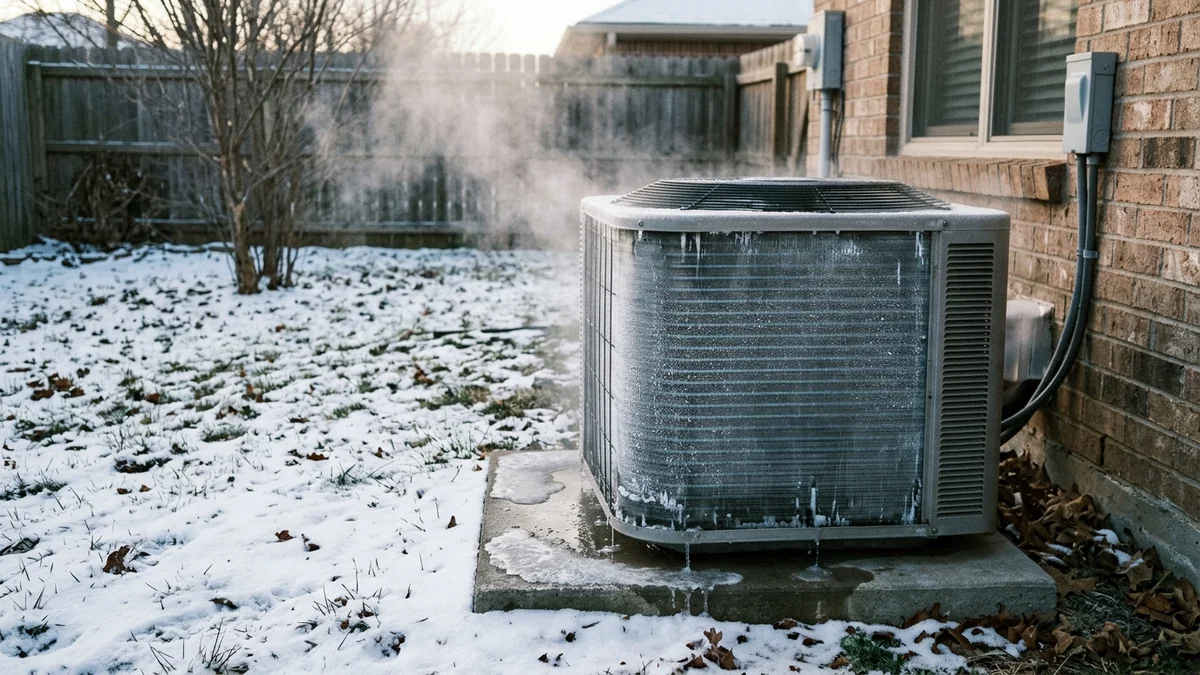
In winter, the outdoor coil gets colder than the outside air so it can absorb heat. In damp weather, frost builds on it. To clear it, the heat pump briefly reverses into cooling mode and warms the outdoor coil. According to the U.S. Department of Energy, the reversing valve switches the refrigerant flow to defrost the outdoor coil, and units with demand-defrost controls run fewer cycles.
During defrost you may notice:
- The outdoor fan stops and the unit hisses or makes a whoosh as the valve shifts.
- A cloud of steam rises from the outdoor unit. This is normal, not smoke.
- Cooler air at the vents for a few minutes, unless backup heat kicks in to cover it.
- The system goes back to normal heating on its own afterward.
Defrost is often more frequent around freezing with high humidity than in very cold, dry weather, because there is more moisture in the air to freeze on the coil. If cold air lasts much longer than a typical defrost or the outdoor unit stays caked in ice, move on to the checks below.
7 checks when your heat pump keeps blowing cold air
↑ ContentsThermostat mode and fan setting
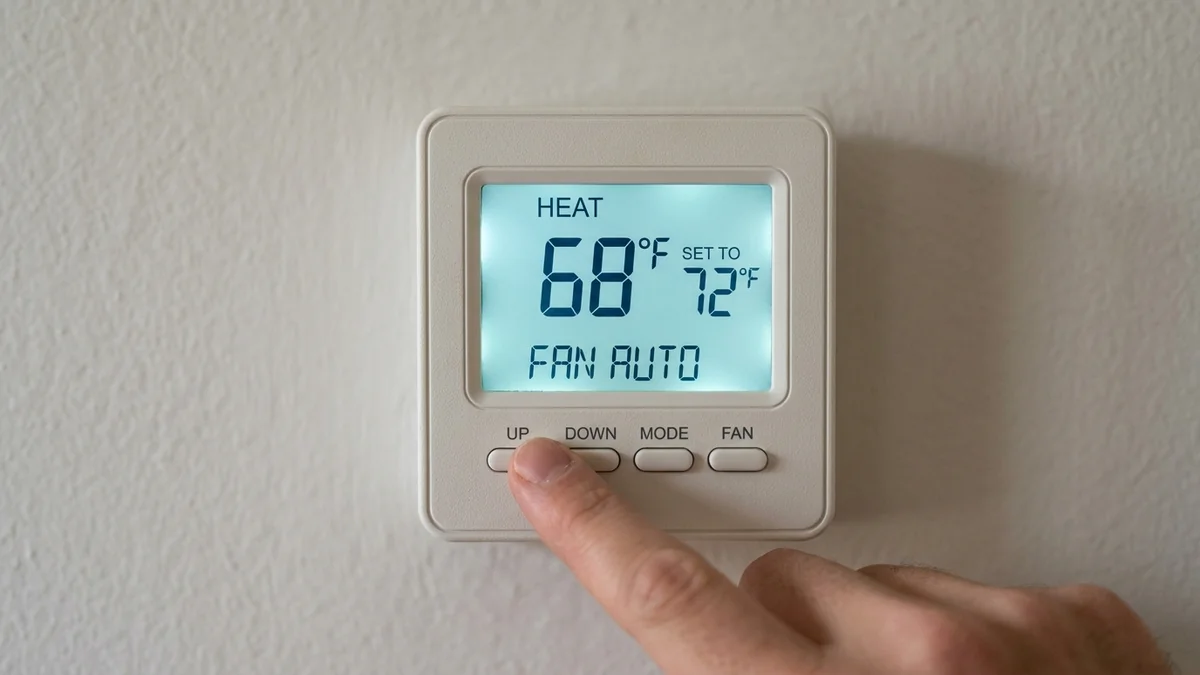
Make sure the thermostat is on HEAT, not COOL or AUTO switching between both, and that the set temperature is above the room temperature. If the fan is set to ON instead of AUTO, it keeps blowing between heating cycles, and that circulating air feels cool. Switch it to AUTO.
Thermostat batteries and wiring after a replacement
Weak batteries can cause odd behavior. If the thermostat was recently replaced, a common mistake is an incorrect reversing valve setting (often labeled O or B). With the wrong setting, the system cools when you ask for heat. Check the thermostat’s installer settings or the installation manual.
The air filter
A clogged filter starves the indoor coil of airflow, lowers efficiency and can trigger safety limits. The Department of Energy notes that replacing a dirty filter can lower an air conditioner’s energy use by 5% to 15%, and the same filter serves your heat pump in winter. Replace it if you cannot see light through it.
Snow, ice and debris around the outdoor unit
The outdoor unit needs air flowing through its coil. Clear snow drifts, leaves and anything stored against it, keeping about two feet of open space. Never chip ice off the coil with tools; the fins and tubes damage easily. Pour lukewarm water over heavy ice or let a defrost cycle do the work.
Breakers and the outdoor disconnect
The outdoor unit usually has its own breaker in the panel and a disconnect box on the wall next to it. If the indoor fan runs but the outdoor unit is silent, a tripped breaker is a likely reason, and the air you feel is unheated. Reset a tripped breaker once; if it trips again, call a technician.
Emergency or auxiliary heat
Most heat pumps have backup electric strips or a furnace. If the outdoor unit has failed, switching to EM HEAT can keep the house warm until a technician arrives. It costs more to run, so use it as a stopgap, not a solution.
Return vents and closed registers
Furniture over return grilles and too many closed registers reduce airflow. Heat pumps are more sensitive to airflow than furnaces, so open them up.
Symptom guide
↑ Contents| What you notice | Likely cause | Next step |
|---|---|---|
| Cool air for a few minutes, steam outside | Normal defrost cycle | Nothing, it ends by itself |
| Cool air between cycles | Fan set to ON | Set the fan to AUTO |
| Cold air right after a thermostat swap | Wrong O/B setting | Correct the installer setting |
| Indoor fan runs, outdoor unit silent | Breaker, disconnect or capacitor | Check breaker once, then call a pro |
| Outdoor unit runs, air still cold | Stuck reversing valve or low refrigerant | Technician visit |
| Outdoor coil stays solid with ice | Defrost control, sensor or airflow problem | Clear around it, then call a pro |
Problems that need an HVAC technician
↑ ContentsSome causes cannot be fixed safely at home, and refrigerant work legally requires certification in the U.S.:
- Stuck reversing valve. The unit runs in cooling mode no matter what the thermostat says.
- Low refrigerant. Usually a leak. Topping it up without finding the leak only delays the next failure.
- Failed defrost board or sensor. The coil ices over and stays that way.
- Bad capacitor or contactor. The outdoor unit hums or does not start.
If you have a dual-fuel system with a gas furnace as backup, and the furnace side is not lighting either, our guide on a furnace not turning on covers those checks.
How to keep it from happening again
↑ Contents- Change or clean the filter every one to three months in heating season.
- Keep the outdoor unit clear of snow and make sure it sits on a stand above typical snow depth.
- Avoid big thermostat setbacks; recovering from a large drop often triggers expensive backup heat.
- Book a maintenance visit before winter so the defrost controls, refrigerant charge and electrical parts get checked.
- During a deep cold snap, protect plumbing too: see our guide to frozen pipes.
Heat pump blowing cold air: FAQ
↑ ContentsWhy is my heat pump blowing cold air in heat mode?
Most often it is a defrost cycle or the fan set to ON. If it lasts longer than a few minutes, check the filter, the outdoor unit’s breaker and whether the outdoor unit is running at all.
How long does a heat pump defrost cycle last?
Usually only a few minutes, and in many systems up to about 15. It should end on its own and return to normal heating.
Is it normal for a heat pump to steam?
Yes. Steam rising from the outdoor unit during defrost is melted frost evaporating. Smoke with a burning smell is not normal; turn the system off and call a technician.
At what temperature does a heat pump stop working well?
It depends on the model. Older units lose capacity below freezing and rely on backup heat, while cold-climate models are designed to keep heating at much lower temperatures. Check the specifications for your unit.
Should I use emergency heat?
Only when the outdoor unit has failed or is being repaired. Emergency heat bypasses the heat pump and usually runs on electric resistance heating, which is much more expensive.
Sources: U.S. DOE Energy Saver, Air-Source Heat Pumps; U.S. DOE Energy Saver, Maintaining Your Air Conditioner; Oak Ridge National Laboratory, Frostless Heat Pump research.
A heat pump blowing cold air is often just defrosting or delivering warm air that feels cool. Check the thermostat, filter, outdoor unit and breaker first. If the outdoor unit runs and the air stays cold, call a technician for the reversing valve or refrigerant.
