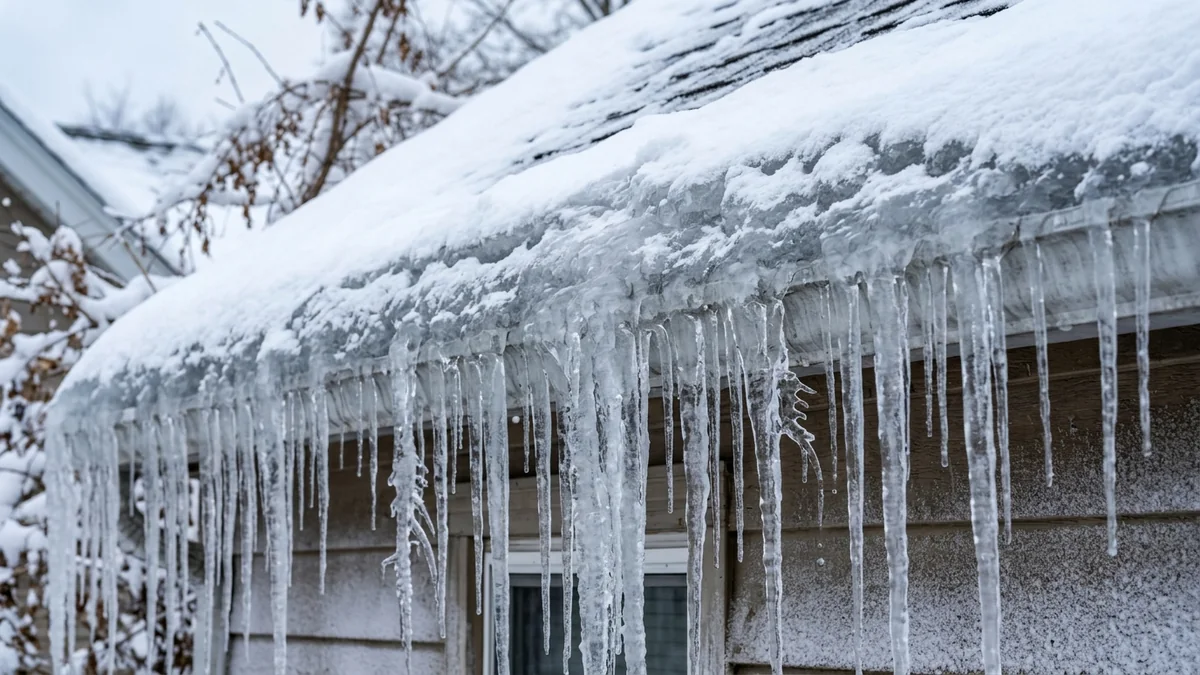
Ice dams are the thick ridges of ice that build up along the lower edge of a roof after snow, often with a row of icicles hanging from the gutter. The ice itself is not the main problem. The water trapped behind it is: it backs up under the shingles and finds its way into ceilings, walls and insulation. This guide explains what causes ice dams, how to deal with one safely right now, and how to stop them forming next winter.
Ice dams form when heat escaping from the house melts snow on the upper roof, and the meltwater refreezes at the colder eaves. Short term, pull snow off the lower roof with a roof rake from the ground and melt channels with calcium chloride, never rock salt or a hammer. Long term, seal attic air leaks, add insulation and keep the roof deck cold with good ventilation.
What is an ice dam and why does it leak?
↑ ContentsThe University of Minnesota Extension explains that ice dams need snow on the roof plus uneven roof temperatures: the higher part of the roof surface is above freezing while the lower edge is below it. Snow melts up high, the water runs down under the snow, and it freezes again when it reaches the cold overhang. Each melt and freeze makes the ridge bigger.
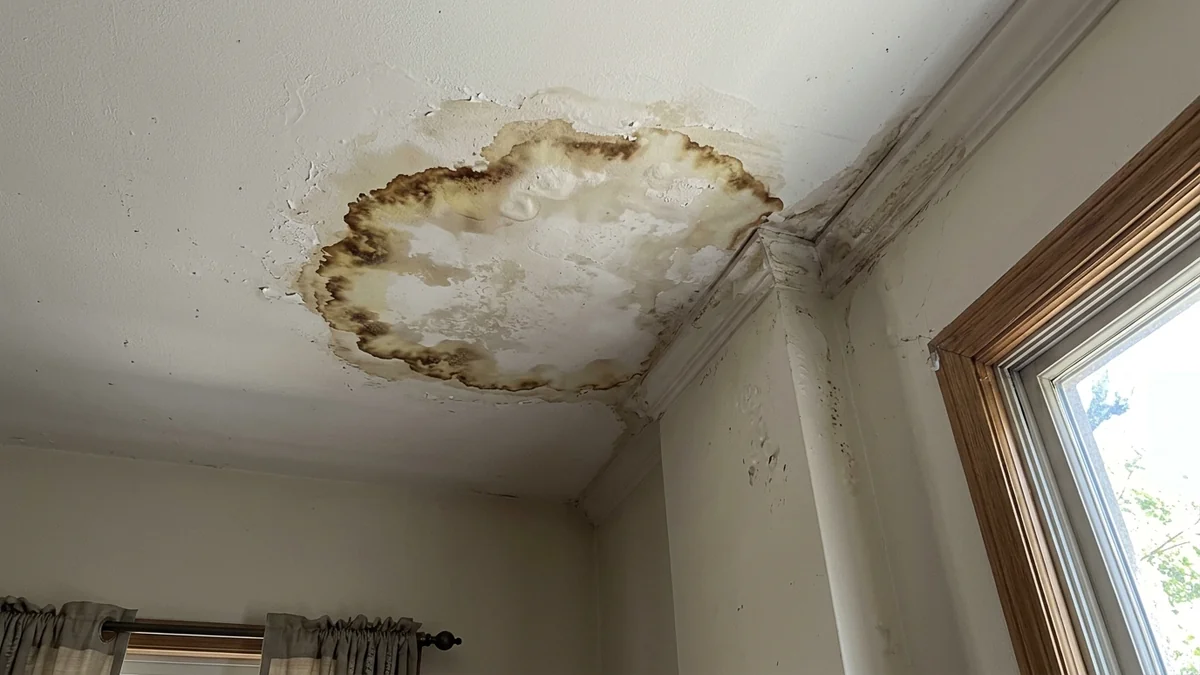
Shingles are designed to shed water running downhill, not to hold back a pool. Once water ponds behind the ice, it seeps under the shingles and through the roof deck. The first signs inside are often stains on the ceiling near exterior walls, damp insulation, peeling paint under the eaves or water running down the inside of a window frame.
What causes the warm roof
↑ ContentsThe extension service is clear that the heat comes mainly from the house itself. The most common sources:
- Air leaks into the attic around recessed lights, attic hatches, plumbing vent pipes, chimneys and wiring holes. Warm, moist air rising through these gaps is usually the biggest factor.
- Too little insulation on the attic floor, or insulation that has been compressed or disturbed.
- Heat sources in the attic such as uninsulated or leaky ductwork, a furnace or water heater in the attic, or bathroom fans that vent into the attic instead of outside.
- Complex roofs with valleys, dormers and skylights, where snow piles up and heat escapes unevenly.
Icicles alone do not prove you have an ice dam, but a thick band of ice at the edge of the roof with icicles below it is a strong sign.
What to do when you have an ice dam now
↑ ContentsRake the snow off the lower roof
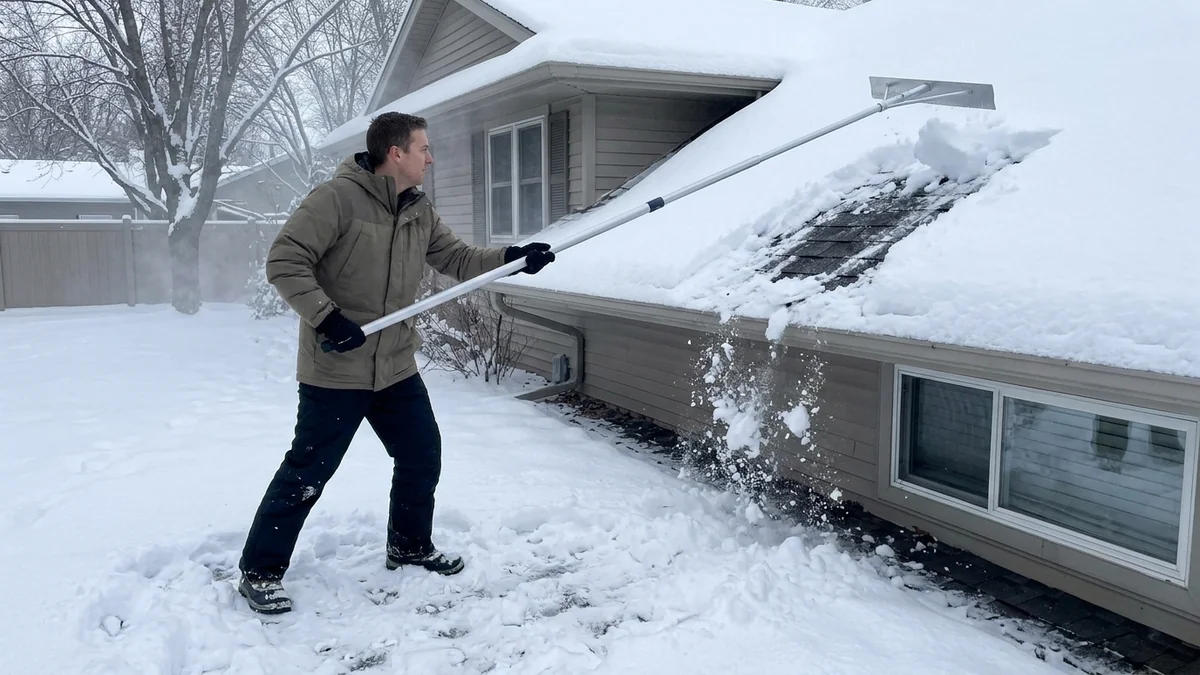
Use a long-handled roof rake from the ground to pull snow off the first three to four feet above the gutter. Less snow means less meltwater feeding the dam. Work from the ground, never from a ladder, and watch for power lines.
Melt drainage channels
Fill an old nylon stocking or a sock with calcium chloride ice melt, tie it off, and lay it on the roof across the ice dam so it runs down over the gutter. It slowly melts a channel that lets trapped water drain. Do not use rock salt (sodium chloride), which damages shingles, gutters and plants.
Deal with leaks inside
Move belongings, put buckets under drips and soak up water quickly. If a ceiling bulges with water, poke a small hole in the center over a bucket to drain it in a controlled way, then turn off lights in that area.
Call for steam removal if needed
Roofing and ice dam companies use low-pressure steam to cut through the ice without damaging the shingles. It is the safest way to remove a large dam quickly.
How to prevent ice dams for good
↑ ContentsThe lasting fix is to keep the whole roof surface cold so snow does not melt unevenly. That means stopping heat getting into the attic in the first place.
| Fix | What it does | DIY or pro? |
|---|---|---|
| Seal attic air leaks | Stops warm, moist air reaching the roof deck | DIY for simple gaps; energy auditor for a full job |
| Add attic insulation | Slows heat moving up through the ceiling | DIY possible; pro for blown-in |
| Insulate and seal attic ducts | Removes a big hidden heat source | HVAC contractor |
| Vent bath and kitchen fans outdoors | Keeps moisture and heat out of the attic | DIY or contractor |
| Improve soffit and ridge ventilation | Helps keep the roof deck cold | Roofer |
| Ice and water shield at re-roofing | Waterproof layer at the eaves limits leaks | Roofer, during roof replacement |
The University of Minnesota Extension notes that powered attic ventilators are not a recommended fix for ice dams in cold climates, because they can pull warm indoor air into the attic and create moisture problems. Sealing and insulation come first.
Do heat cables work?
↑ ContentsHeat cables laid in a zigzag along the roof edge can keep drainage paths open, and they are a reasonable option for a problem spot you cannot fix any other way. They do not solve the cause, they use electricity all winter, and the melting effect only extends a short distance from the cable. Treat them as a patch, and choose a product listed for roof and gutter de-icing.
Check inside after the thaw
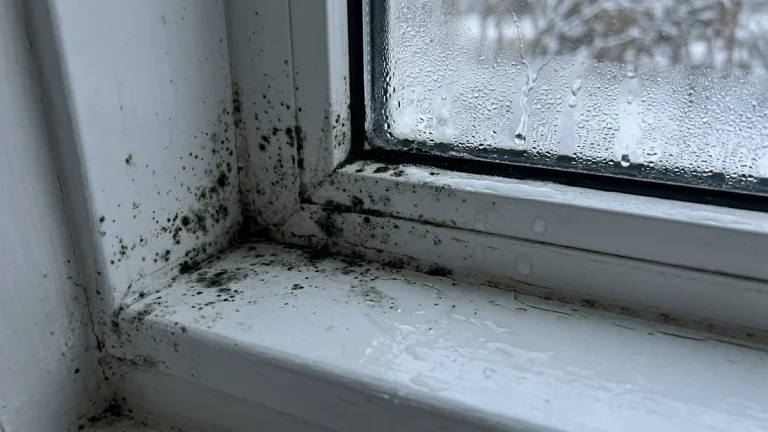
↑ ContentsWhen the weather warms up, look in the attic for wet insulation, water-stained sheathing and frost on nails. Wet insulation loses much of its value and can grow mold if it stays damp. Check ceilings and exterior walls under the problem area for stains or soft drywall. If you are also seeing water on windows on cold mornings, high indoor humidity is part of the picture; our guides to condensation on windows and mold on window sills cover that side. Cold-weather leaks can also come from plumbing, so rule out frozen pipes if the stain is near a bathroom or kitchen wall.
When to call a professional
↑ Contents- Water is coming through the ceiling, light fixtures or walls.
- The ice dam is large and the roof is steep or two stories up.
- You get ice dams every winter despite raking the roof.
- You want an energy audit with a blower door test to find attic air leaks.
Ice dams: FAQ
↑ ContentsWill ice dams melt on their own?
Eventually, but often not before the trapped water has leaked. A run of freeze and thaw cycles can make them grow for weeks. Rake the roof and open drainage channels rather than waiting.
Can gutters cause ice dams?
Gutters do not cause them, but clogged gutters filled with ice can make a dam bigger and heavier. The root cause is heat loss from the house.
Is it OK to use salt on an ice dam?
Avoid rock salt. Calcium chloride in a stocking is the usual DIY method. Follow the product label and keep it away from plants below.
Does homeowners insurance cover ice dam damage?
Many policies cover interior water damage from ice dams, but terms vary. Photograph the damage, limit further harm, and check your policy or call your agent.
Do metal roofs get ice dams?
Less often, because snow slides off more easily, but they can still form at the eaves on poorly insulated houses.
Sources: University of Minnesota Extension, Dealing with and preventing ice dams.
Ice dams are a heat-loss problem that shows up on the roof. Rake the snow, open a drainage channel safely, and then fix the attic so the roof stays cold next winter.