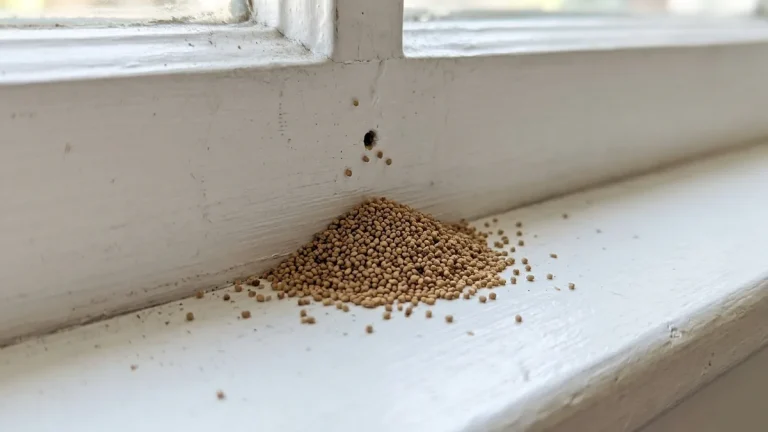
Scratching behind the drywall at night, a faint rustle in the ceiling, a musty smell in one corner of a closet: mice in walls are easier to hear than to see. The good news is that you do not need to open the wall to deal with them. Mice in the walls still come out to find food and water, and that is where you catch them. The real work is finding how they get in and closing it.
To get rid of mice in walls, find the entry points around pipes, vents and the foundation, set snap traps along the walls where the mice come out (behind appliances, under sinks, in the attic or basement), and seal every gap of 1/4 inch or more with steel wool and caulk or metal. Keep trapping until a week passes with no catches and no fresh droppings.
Signs you have mice in the walls
↑ Contents- Sounds at night. Light, quick scratching or scurrying, often around dusk and in the early morning. Mice are small and fast; heavier thumping is more typical of rats or squirrels.
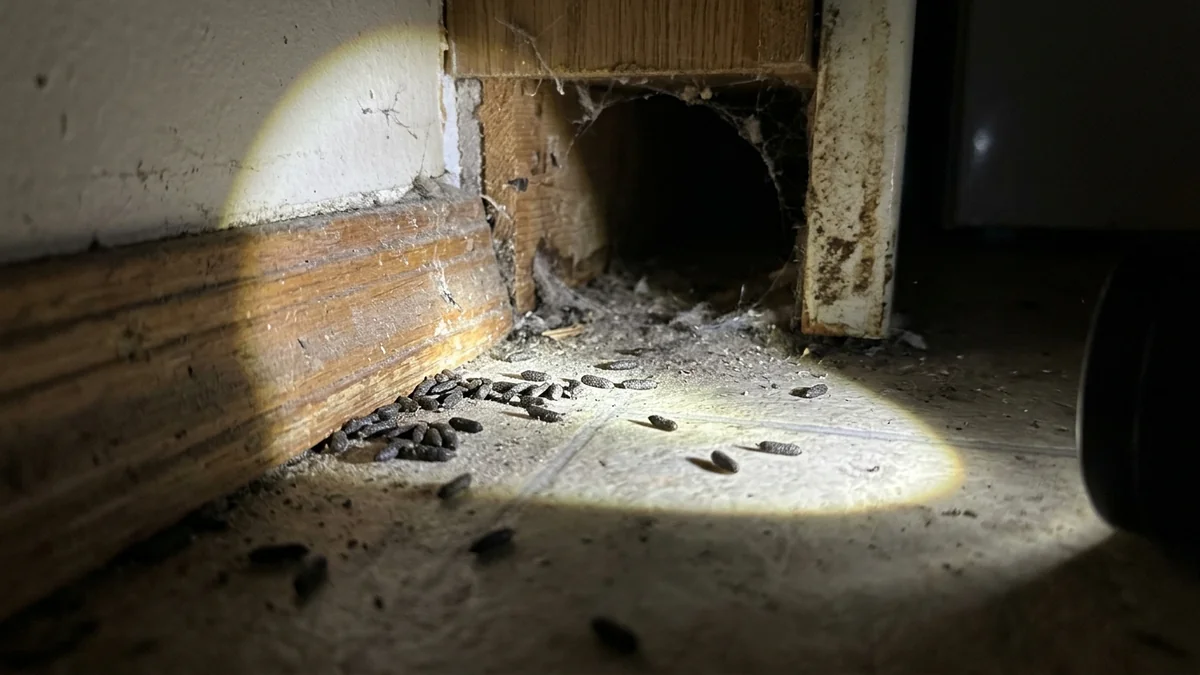
- Droppings. Small, dark, rice-sized pellets with pointed ends, usually along walls, in drawers, under the sink or behind the stove.
- Gnaw marks on baseboards, food packaging, wiring insulation or the edges of holes around pipes.
- Nesting material such as shredded paper, insulation or fabric in hidden corners.
- A musty, ammonia-like smell in closed spaces like cabinets or closets.
The CDC notes that it can be hard to tell whether droppings are old or new. One way to know is to clean the area safely: if new droppings appear afterwards, mice are still active.
Mice, rats or squirrels? Identify by sound and timing
↑ Contents| What you hear | When | Most likely |
|---|---|---|
| Light scratching, quick scurrying inside walls | Night and early morning | Mice |
| Heavier scratching, gnawing, thumps | Night | Rats |
| Running, rolling sounds in the attic | Daytime, dawn and dusk | Squirrels |
| Chirping or rustling with a sweet, sour smell | Dusk | Bats (call a wildlife pro) |
Find how they get in
↑ ContentsAccording to the CDC’s seal-up guidance, a mouse can fit through a hole the width of a pencil, about 1/4 inch. Walk around the outside of the house with a flashlight and check:
- Where pipes, cables, gas lines and dryer vents enter the wall.
- Gaps between the foundation and siding, and cracks in the foundation itself.
- Garage door corners and worn door sweeps.
- Roof edges, soffits, gable vents and attic vents.
- Crawl space vents and the gap under exterior doors.
Inside, look under kitchen and bathroom sinks, behind the stove and refrigerator, around the water heater and furnace, and where plumbing goes through the floor. Wall cavities connect to all of these.
How to trap mice that live in the walls
↑ ContentsMice in walls still travel to the kitchen, pantry or garage to eat. Trap them on those routes.
Use snap traps
The CDC recommends traditional snap traps and advises against glue traps and live traps, which can frighten rodents into urinating and raise your risk of exposure. Buy more traps than you think you need; a dozen is not unusual for one infestation.
Bait lightly
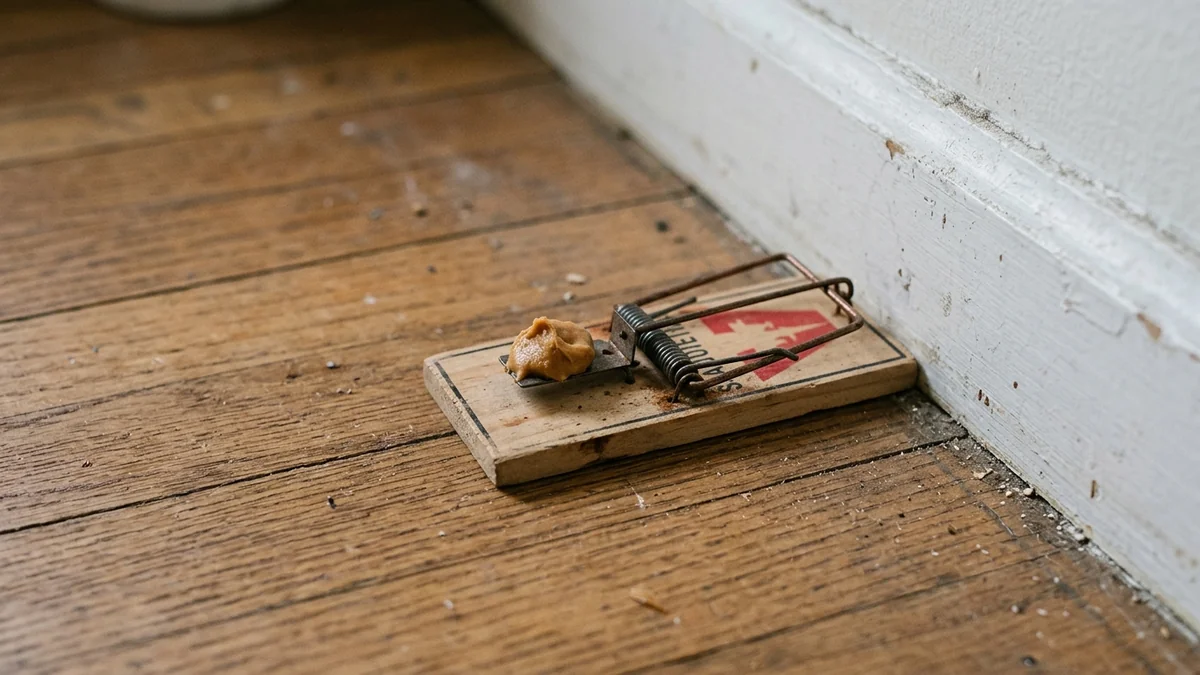
A pea-sized dab of peanut butter on the trigger is enough. Too much bait lets a mouse lick it off without setting off the trap.
Place traps against the wall
Set each trap perpendicular to the wall so the bait end touches it, forming a “T”. Mice run along walls and edges rather than across open floor.
Put them where activity is
Behind appliances, at the back of cabinets, under sinks, along attic and basement walls, and near the holes you found. Space them a few feet apart.
Check daily and keep going
Dispose of catches with gloves and reset. When a week passes with no catches and no fresh droppings, the active population is usually gone.
Why poison in the walls is a bad idea
↑ ContentsRodenticide baits work slowly, and a mouse that eats them often goes back to its nest to die, which is frequently inside the wall. The result is a smell that can last days or weeks, plus flies. The CDC suggests saving poison or bait stations for infestations that do not respond to trapping. If you do use them, choose EPA-registered products in locked bait stations and follow the label exactly.
Seal the holes once trapping is under way
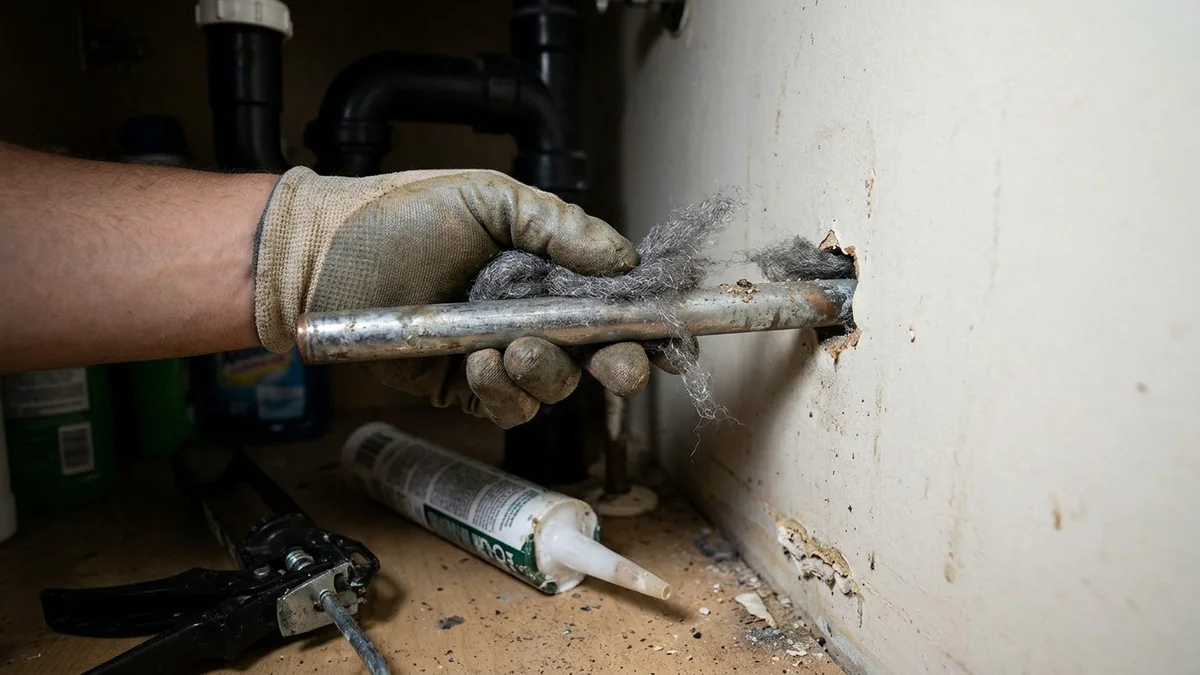
↑ Contents- Fill small holes with steel wool and lock it in place with caulk or spray foam. Foam alone gets chewed through.
- Cover larger openings with hardware cloth, metal flashing, sheet metal or cement.
- Install door sweeps and replace worn garage door seals.
- Screen attic and crawl space vents with metal mesh.
- Store pantry food, pet food and birdseed in glass, metal or thick plastic containers with tight lids.
Do not seal the last holes while many mice are still inside, or they will chew new exits into rooms. Trap first, seal as activity drops.
Dead mouse smell in the wall
↑ ContentsIf you smell decay in one spot, a mouse probably died nearby. Sometimes it can be reached by removing an outlet cover, a vent register or an access panel. If not, the smell usually fades in one to three weeks as the carcass dries. Ventilate the room and use an odor absorber in the meantime. A professional can cut a small, patchable hole if the smell is in a bedroom or kitchen and does not fade.
Clean up droppings safely
↑ ContentsDo not sweep or vacuum droppings: that can put particles in the air. The CDC recommends wearing gloves, spraying droppings and urine with a disinfectant or a bleach solution until soaked, waiting five minutes, then wiping up with paper towels and bagging the waste. Wash your hands well afterward.
Seeing other pests in the same hidden spots? Compare what you find with our guides to termite droppings and silverfish in the house.
When to call a pest control professional
↑ Contents- You keep catching mice after two or three weeks of trapping.
- You hear activity in many walls or across several floors.
- Entry points are high on the roof or in places you cannot reach safely.
- You find signs of rats, or gnawed wiring.
Mice in walls: FAQ
↑ ContentsWill mice in walls leave on their own?
Rarely. A wall cavity next to a warm kitchen is ideal shelter, and mice breed quickly. Without trapping and sealing, the problem usually grows over winter.
Can mice in the walls get into the house?
Yes. They use gaps around pipes, under cabinets and behind appliances. If you hear them, assume they are visiting living areas at night.
Do ultrasonic repellers work on mice in walls?
Evidence for them is weak, and walls block much of the sound. Trapping and sealing are the methods public health agencies recommend.
Are mice in the walls dangerous?
They can contaminate food and surfaces and chew wiring insulation. Clean droppings safely and deal with the infestation promptly.
Should I cut a hole in the wall to remove the mice?
Almost never. Trap where they come out to feed. Open a wall only for a dead mouse you cannot otherwise reach, or when a pro recommends it.
Sources: CDC, Controlling Wild Rodent Infestations; CDC, How to Seal Up to Prevent Rodents; CDC, How to Trap Up to Remove Rodents.
Mice in walls are beaten where they come out, not inside the wall: snap traps along their routes, steel wool and metal over every gap, and food stored where they cannot reach it.