
Condensation on windows is your house telling you how much water is floating around in the air. A few drops at the bottom corner of the glass on a frosty January morning is normal. Water running down the pane, puddles on the sill, black spots on the caulk or fog trapped between the two layers of glass are not. Most cases come down to indoor humidity, and you can bring that down in a weekend with an exhaust fan, a cheap hygrometer and a few habit changes.
Condensation forms inside windows when warm, moist indoor air touches glass colder than its dew point. Keep winter indoor humidity around 30 to 40%, and lower as it gets colder outside. Run bathroom and kitchen exhaust fans longer, dry laundry outdoors or in a vented dryer, and open blinds. Fog between the panes means a failed seal: the glass unit needs replacing.
Why windows sweat: dew point in plain terms↑ Contents
Air always carries some water as invisible vapor. Warm air can hold more of it than cold air. When air cools down, there comes a temperature where it simply cannot hold all that vapor anymore, and the extra turns back into liquid water. That temperature is the dew point.
Your window glass is usually the coldest surface in a heated room. The air right against it gets chilled, and if the glass is below the dew point of your indoor air, water beads up on it. Think of a cold can of soda in July.
Two things push you over the line. The first is more moisture in the air. People add it just by breathing: NDSU Extension puts it at about 3 pints of water vapor per person per day. Cooking, showers and laundry add more. Window maker Renewal by Andersen estimates that cooking three meals releases 8 to 10 cups of water into the air, and each shower about a cup.
The second is colder glass. A single-pane window or an old aluminum frame runs much colder than a modern double-pane unit, so it hits the dew point sooner. Drafts around the sash chill the glass further. Heavy curtains and closed blinds trap a pocket of cold air against the window, which is why you often find the worst window condensation in winter behind the drapes in the morning.
Inside, outside or between the panes: what each one means↑ Contents
Before you fix anything, run a finger across the wet glass. Where the water sits tells you almost everything.
- Condensation inside windows (on the room side)This is the common winter problem. Indoor humidity is too high for how cold the glass is. Some fog along the bottom edge on the coldest mornings is normal, because the edge of the glass runs colder than the center. Water that streams down, pools on the sill or shows up on most windows every day means the house holds too much moisture.Fix: lower indoor humidity and warm the glass surface (sections 3 and 4).
- Condensation on the outside of the glassShows up mostly on cool mornings in spring and fall, the same way dew forms on your lawn. The outer pane stays cold because the window is doing its job of keeping indoor heat from reaching it. Window makers treat it as a sign of an efficient window, not a defect.Fix: none needed. It burns off once the sun hits the glass.
- Condensation between window panesDouble-pane and triple-pane windows are sealed insulated glass units (IGUs), with dry air or argon gas trapped between the layers. If you see fog, droplets or a milky white film that you cannot wipe from either side, the edge seal has failed and humid air is getting in. The glass will not clear up on its own, and the unit has lost much of its insulating value.Fix: replace the glass unit (often just the sash or the IGU, not the whole frame). Check the warranty first: many window makers cover seal failure for years after installation.
One special case: older homes with a separate storm window over the main window. That gap is not sealed. If the moisture is between the inner window and the storm, warm indoor air is leaking past the inner sash. Tightening that inner window with weatherstripping usually stops it.
The right indoor humidity in winter↑ Contents
The general target from the U.S. EPA’s guide to mold and moisture is to keep indoor relative humidity below 60%, ideally between 30 and 50%. That range keeps mold in check. In winter, colder glass means you need to aim lower. Extension specialists at NDSU and Iowa State University put the winter sweet spot at roughly 30 to 40%. Below that, skin and nasal passages dry out. Above that, windows start to drip.
The colder it gets outside, the lower you need to go. Window manufacturers publish maximum indoor humidity guidelines for a house kept at 70°F. The figures below come from the Renewal by Andersen condensation brochure:
- 20°F to 40°F outside: up to 40% indoors
- 10°F to 20°F outside: up to 35% indoors
- 0°F to 10°F outside: up to 30% indoors
- 0°F down to 10 below: up to 25% indoors
- 10 below to 20 below: up to 20% indoors
- Colder than 20 below: up to 15% indoors
To put that in real terms, Iowa State notes that at 70°F inside and 35% humidity, a single-pane window starts to fog when it drops to about 30°F outdoors. A double-pane window holds out until it is below zero, and triple-pane glass until around 40 below. So if your double-pane windows sweat at 25°F, your humidity is too high, plain and simple.
Buy a digital hygrometer for $10 to $15 and put it in the main living area, away from the kitchen and bathroom. If you run a whole-house humidifier on the furnace, turn it down as the temperature drops. A humidifier set to 45% in a cold snap is one of the most common causes of streaming windows.
How to stop condensation on windows: 9 fixes↑ Contents
Start at the top. The first four cost little or nothing and handle most homes.
-
Run bathroom and kitchen exhaust fans, and run them longer
Most people switch the bathroom fan off when they walk out. Leave it on at least 20 minutes after a shower, or until the mirror is completely clear. Use the range hood every time you boil pasta, simmer soup or run the dishwasher, as the EPA recommends. A countdown timer or humidity-sensing fan switch takes the guesswork out.
Check where the fan actually goes. A bath fan that dumps into the attic instead of outdoors just moves the moisture somewhere you cannot see it, and NDSU warns that leads to hidden mold. If you replace a switch or fan yourself, turn off the breaker first.
-
Turn down the humidifier
If you have a furnace humidifier or room humidifiers, set them to match the outdoor temperature using the list above. On very cold nights, turn them off. This one change fixes more cases of condensation inside windows than any other.
-
Open blinds and curtains during the day
Warm room air needs to reach the glass to keep it above the dew point. Open window coverings during the day, and if you find water behind them every morning, leave them open a few inches at night too. You lose a bit of heat, but the glass stays warmer and drier. Keep furniture off the heat registers.
-
Use a ceiling fan on low
Moving air breaks up the cold layer sitting against the glass. In winter, set ceiling fans to turn clockwise on low speed. That pushes warm air down the walls and across the windows without creating a draft.
-
Dry laundry outside, or in a dryer vented outdoors
A full rack of wet clothes drying indoors releases several pints of water into the room. Dry it outside when you can, or in a dryer whose vent runs outdoors. Check that the dryer duct is connected and the outside flap opens freely. A disconnected duct behind the dryer pumps warm, wet air straight into the house.
-
Move houseplants and other water sources
A cluster of plants on a windowsill creates its own humid microclimate right at the glass. Move them a few feet back, or group them in a room with fewer windows. The same goes for aquariums (keep a lid on them) and firewood, which can carry a lot of water. Store it outside or in the garage.
-
Add a dehumidifier where moisture collects
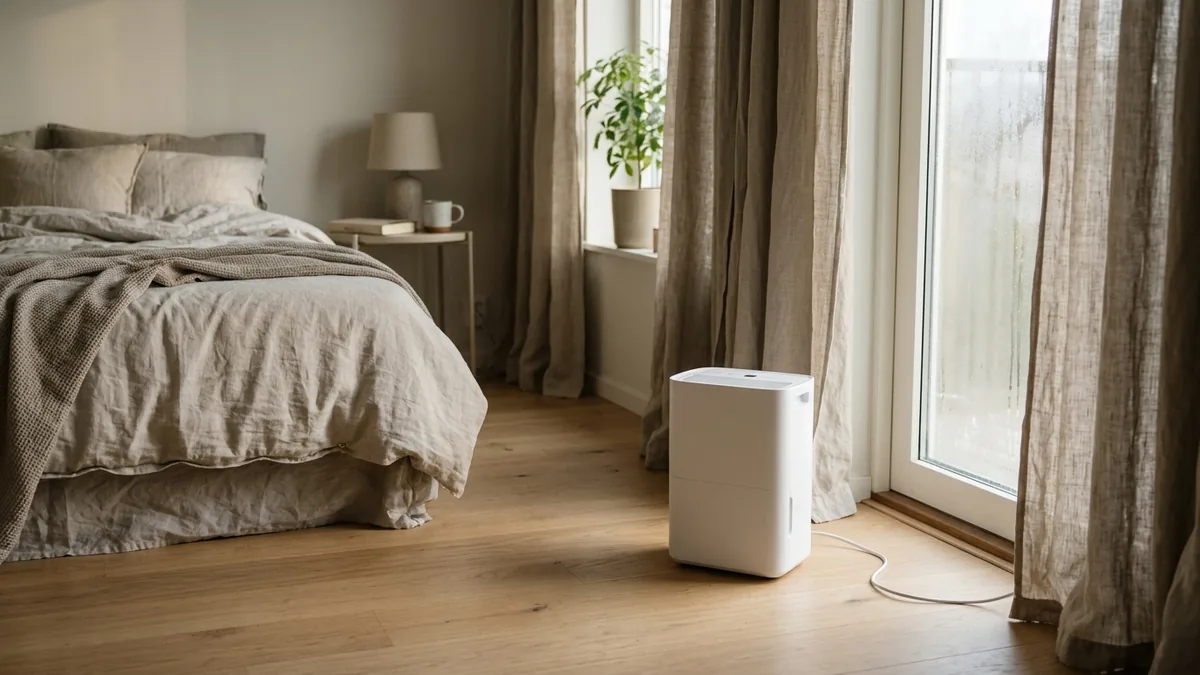
A dehumidifier works well in damp basements. In heated rooms in midwinter it often does little: NDSU notes they are not very effective once indoor humidity is already under 50%. Set it to 45 to 50% in a basement, empty or drain the bucket daily, and clean the filter monthly.
-
Stop drafts with weatherstripping and caulk
Cold air leaking around the sash chills the glass and the frame. Replace flattened weatherstripping, caulk gaps where the trim meets the wall, and seal any cracked glass. A shrink-film window insulation kit, about $5 to $10 per window, adds a pocket of still air and warms the inner surface.
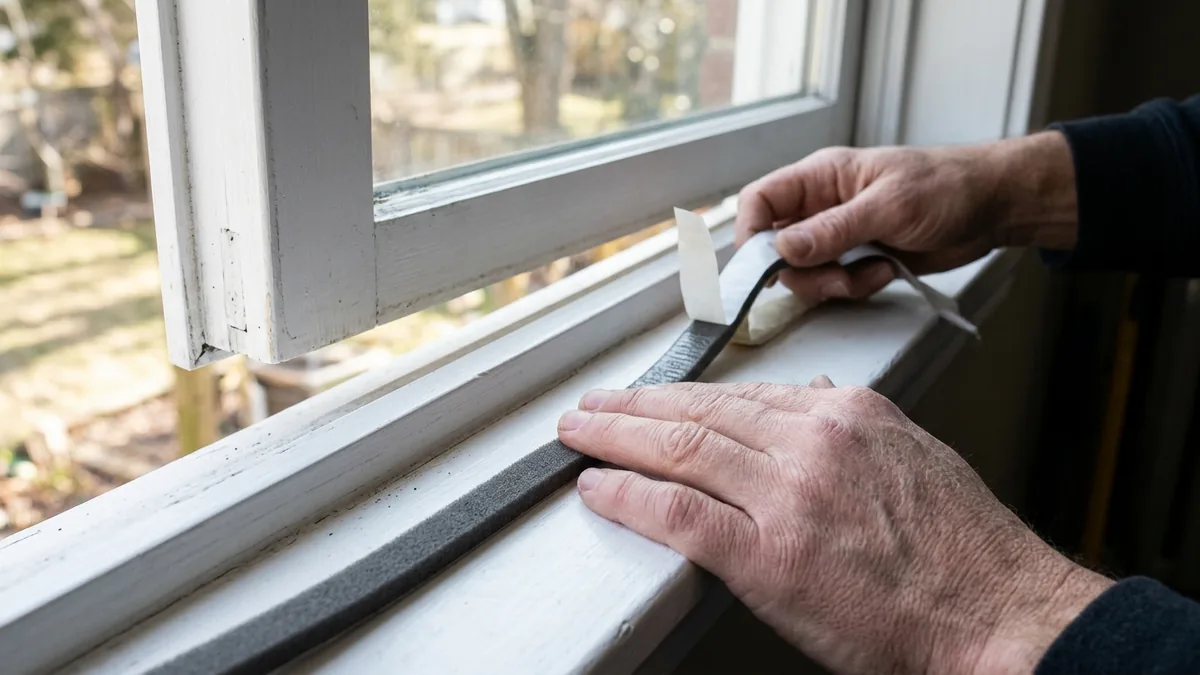
Weatherstripping around the frame stops cold drafts that make the glass sweat. -
Add storm windows or upgrade the glass
On single-pane windows, an interior or exterior storm window is the biggest step up for the money. When you replace windows, look for low-E double-pane glass with argon fill and warm-edge spacers. They keep the room-side glass much warmer. In very tight homes, ask an HVAC contractor about a heat recovery ventilator (HRV). It swaps stale indoor air for dry outdoor air and recovers up to 70% of the heat, according to NDSU.
Wipe and dry the sills every morning
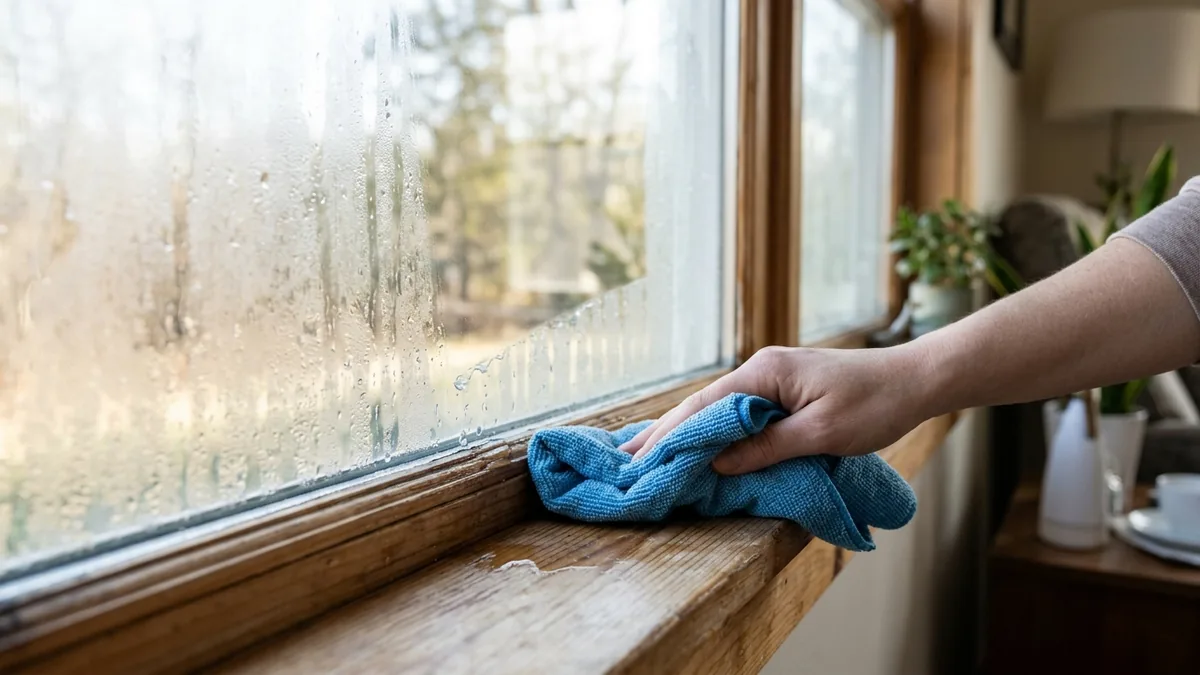
While you bring the humidity down, keep a microfiber cloth or a small squeegee near the worst windows and wipe the glass and sill each morning. Standing water soaks into wood sills, swells the joints and peels paint. The EPA says wet materials should be dried within 24 to 48 hours to prevent mold. Check the weep holes at the bottom of vinyl frames and clear them with a pipe cleaner so water drains out instead of pooling in the track.
When condensation points to a bigger moisture problem↑ Contents
Window condensation is often the first visible sign of a moisture problem. Vapor moves through drywall, wood and even concrete, so the source may be a long way from the window that drips. Look further if you notice:
- Black or green spots on window caulk, the frame or the wall below the window.
- A musty smell in closets on outside walls, or in the basement.
- Peeling or blistering paint, stained ceilings or warped trim.
- Sweating cold water pipes or a damp feel to the whole house.
- Frost or ice building up on the inside of windows for days at a time.
- Humidity above 50% indoors in winter even with fans and humidifier under control.
Common hidden sources include a crawl space with bare soil (cover it with a plastic vapor barrier), clogged gutters dumping water against the foundation, an unvented gas appliance, a dryer vent that has come loose, or a plumbing leak inside a wall.
Mold cleanup: the EPA says a homeowner can usually handle a moldy area smaller than about 10 square feet (a patch roughly 3 feet by 3 feet). Wear an N95 respirator, gloves and goggles, scrub hard surfaces with water and detergent, and dry them completely. Never mix bleach with ammonia or other cleaners: the fumes are toxic. For larger areas, mold inside walls or anyone in the house with asthma or a weak immune system, call a mold remediation professional.
Gas appliances: heavy, sudden condensation along with headaches or stuffiness can mean a fuel-burning appliance is not venting properly. Make sure carbon monoxide alarms are working and have the furnace, water heater and any gas fireplace inspected by a licensed technician.
Condensation on windows: FAQ↑ Contents
Is condensation on windows normal in winter?
A little fog along the bottom edge on the coldest mornings is normal. Water running down the glass every day or wet sills mean your indoor humidity is too high for the outdoor temperature.
How do I stop condensation inside my windows overnight?
Lower the humidifier setting before bed, run the bathroom fan after evening showers, leave blinds open a few inches so warm air reaches the glass, and run a ceiling fan on low. If it still forms, wipe it off in the morning and check your humidity with a hygrometer.
Can condensation between window panes be fixed?
Not permanently. Defogging services drill and dry the unit, which clears the view, but the seal stays broken and the insulating gas is gone. Replacing the glass unit or the sash is the lasting fix.
What humidity causes condensation on windows?
It depends on how cold the glass is. With double-pane windows and a 70°F house, staying at or under about 35% is usually safe down to around 10°F outside. When it drops below zero, you may need to go down to 25% or lower to keep the glass dry.
Does a dehumidifier help with window condensation?
It helps in damp basements. In heated rooms during cold weather it often does little because the air is already fairly dry. Exhaust fans and a lower humidifier setting usually do more.
Can window condensation cause mold?
Yes. Water that sits on sills and frames for more than a day or two can grow mold on wood, caulk, drywall and the dust in the window track. Wipe and dry the sills daily and fix the humidity source to stop it from coming back.
Why is there condensation on the outside of my new windows?
It means the windows insulate well. The outer glass stays cold because house heat is not reaching it, so morning dew forms on it like on grass. It clears once the sun warms the glass.
Condensation on windows comes down to where the water sits. On the room side, it means too much indoor moisture for the cold outside, and fans, a lower humidifier setting and open blinds usually solve it. On the outside, it is harmless. Between the panes, the seal has failed and the glass unit needs replacing. Keep winter humidity around 30 to 40%, dry the sills daily, and treat mold or soaked frames as a signal to look for a bigger moisture source.
Sources: U.S. EPA, A Brief Guide to Mold, Moisture and Your Home, NDSU Extension on window condensation, Iowa State University Extension, Winter Window Condensation, Renewal by Andersen condensation brochure.