Mold on window sills shows up every winter in millions of homes, usually as black or gray speckles along the bottom of the frame, on the rubber seal or in the corners of the track. It is easy to wipe off and just as easy to grow back, because the real cause is the water that collects there every cold morning. This guide covers how to clean it safely on each type of sill and how to stop the moisture that feeds it.
Mold on window sills grows on condensation that runs down cold glass and sits on the sill. Wearing gloves, scrub hard surfaces with detergent and water, dry them completely, and replace soft rotted wood or moldy caulk. Then keep indoor humidity between 30% and 50%, ventilate, and wipe condensation daily so it does not return.
Why mold keeps growing on window sills
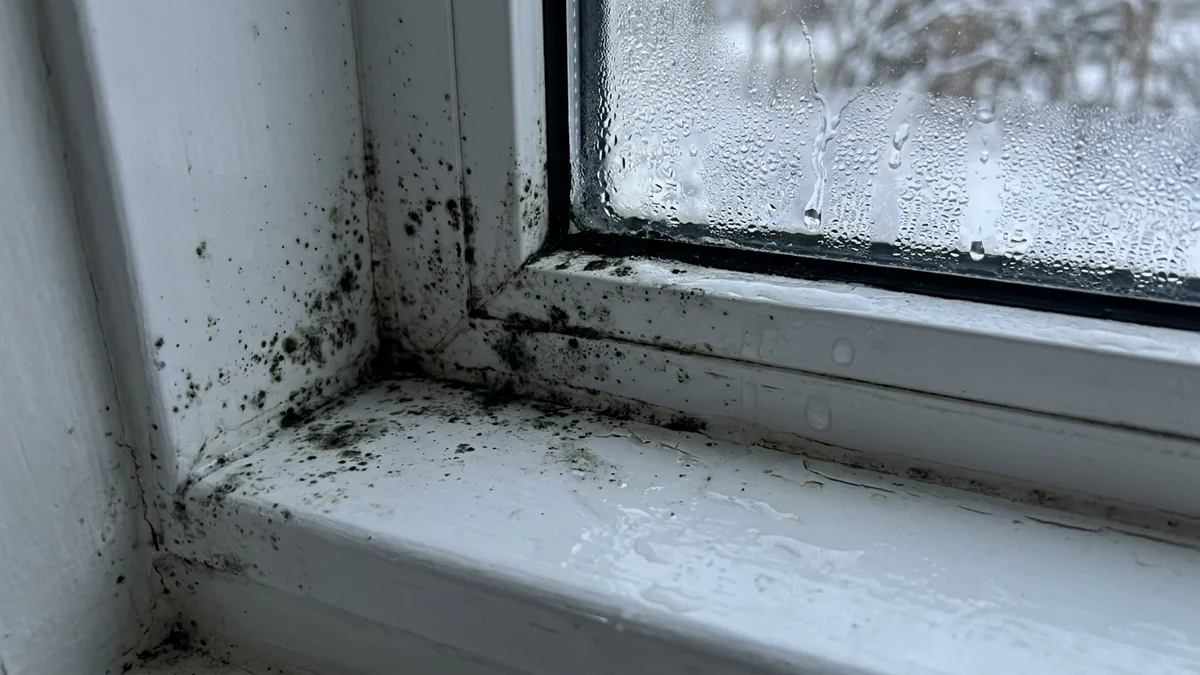
↑ ContentsMold needs three things: spores, which are everywhere indoors; something to feed on, such as dust, paint, wood or the film on a rubber seal; and moisture. Windows supply the moisture. Glass is the coldest surface in most rooms in winter, so warm, humid indoor air condenses on it, runs down, and pools on the sill and in the track.
The EPA’s guide to mold and moisture says it plainly: the key to mold control is moisture control. Condensation on windows is a sign that indoor humidity may be high. If your windows run with water most mornings, read our guide on condensation on windows alongside this one, because the two problems have the same fix.
Is the black mold on my window sill dangerous?
↑ ContentsYou cannot tell which species of mold you have by color, and “black mold” is not a single type. The EPA’s position is that any mold growing indoors should be removed, and that sampling is usually unnecessary for a visible problem you can clean. What matters more is the size of the area and who lives in the home.
Mold can trigger allergy and asthma symptoms in sensitive people. If someone in the house has asthma, a weakened immune system or a chronic lung condition, have someone else do the cleaning or call a professional, and talk to a doctor if symptoms appear.
Before you start: protection and size
↑ Contents- Check the size. The EPA says most people can clean an area under about 10 square feet (roughly 3 feet by 3 feet) themselves. A typical window sill is far below that.
- Protect yourself. Wear rubber or nitrile gloves, safety glasses and an N95 respirator. Avoid touching mold with bare hands.
- Ventilate. Open the window if the weather allows and keep the door to the room closed while you work.
- Skip the bleach debate. The EPA does not recommend bleach as a routine mold treatment. Detergent, water and scrubbing remove the growth on hard surfaces. Never mix bleach with ammonia or other cleaners.
How to clean mold off window sills, by surface
↑ ContentsVinyl, aluminum and glass
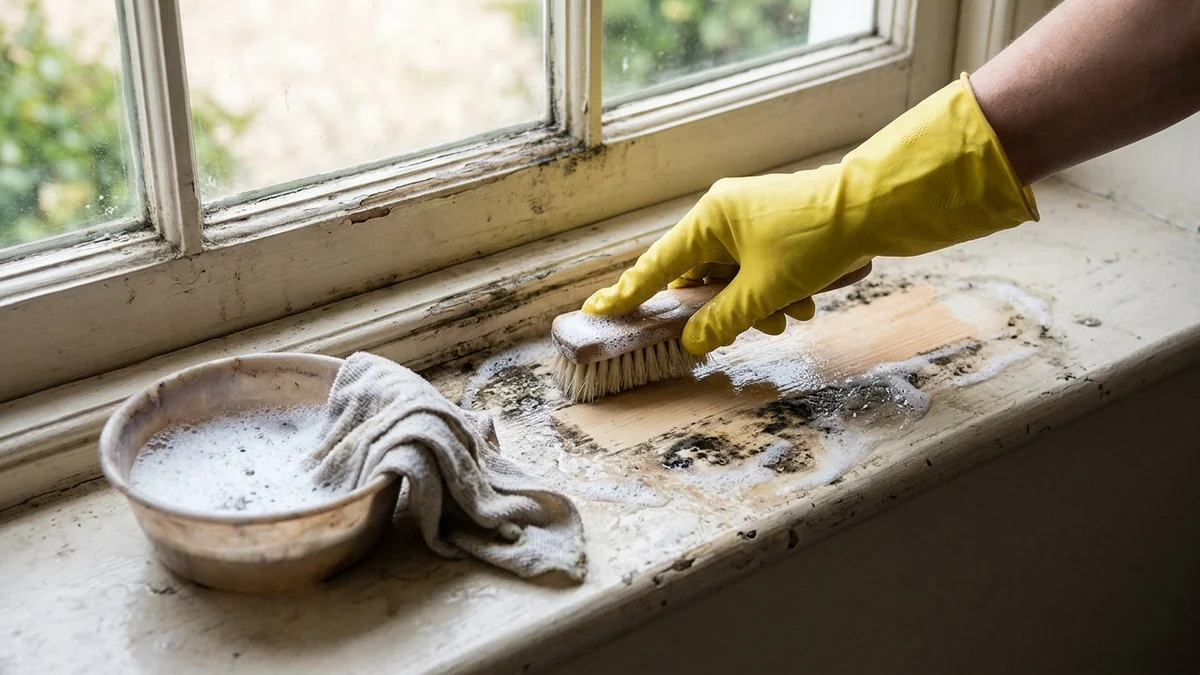
These are non-porous, so the mold sits on the surface. Wipe loose growth with a damp disposable cloth, then scrub with warm water and dish detergent using a soft brush. Rinse with a clean damp cloth and dry with a towel. Do not dry-brush first; it sends spores into the air.
Painted wood sills
If the paint is intact and the wood underneath is hard, clean it the same way as vinyl, without soaking it. Dry it thoroughly and let it air out for a day. If the paint is blistered or the mold has gone into the grain, sand the area lightly while wearing a respirator, wipe the dust with a damp cloth, let it dry and repaint with a mold-resistant primer.
Soft or rotted wood
Push a screwdriver into the wood. If it sinks in easily, the wood is rotted and mold will come back from inside it. Small soft spots can be cut out and filled with epoxy wood filler. A sill that is soft along its length needs replacing by a carpenter.
Rubber seals and gaskets
Seals on vinyl and aluminum windows trap moisture in their folds. Scrub with detergent and an old toothbrush, rinse and dry. If the black marks are inside the rubber and do not come off, the staining is permanent; replace the seal if it is also cracked or loose.
Window tracks and weep holes
Vacuum loose debris from sliding window tracks with a crevice tool, then scrub with detergent. Find the small weep holes or slots on the outside of the bottom frame and clear them with a pipe cleaner. Blocked weep holes are a common reason water sits in tracks.
Caulk around the sill
Mold that has grown into caulk cannot be cleaned out. Cut the old caulk away with a utility knife, clean and dry the joint, and apply fresh mildew-resistant silicone or acrylic caulk.
Cleaning method at a glance
↑ Contents| Surface | Clean or replace? | Method |
|---|---|---|
| Vinyl, aluminum, glass | Clean | Detergent and water, soft brush, dry |
| Painted wood, paint intact | Clean | Detergent, minimal water, dry fully |
| Painted wood, paint failing | Clean and refinish | Light sanding, mold-resistant primer, paint |
| Soft or rotted wood | Repair or replace | Epoxy filler or new sill |
| Caulk | Replace | Cut out, dry, recaulk |
| Rubber seal | Clean, replace if stained and cracked | Toothbrush and detergent |
How to stop mold from coming back
↑ ContentsCleaning only resets the clock. To stop the regrowth you have to cut the moisture.
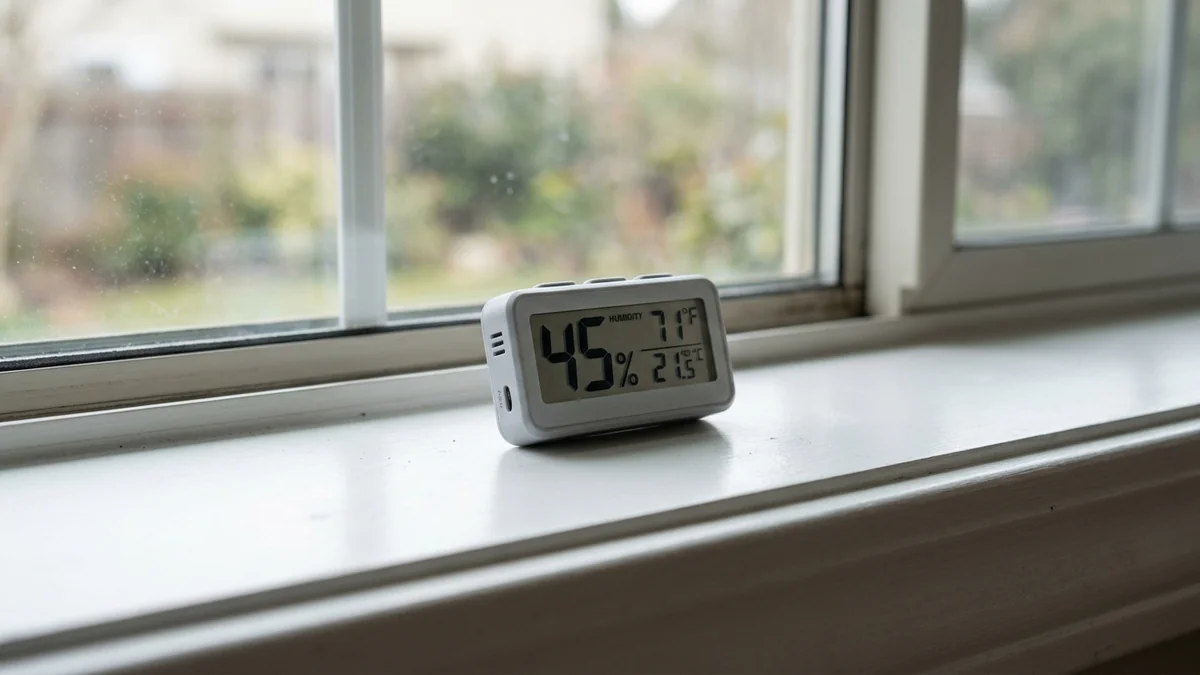
- Measure humidity. A digital hygrometer costs little and tells you what is happening. The EPA recommends keeping indoor relative humidity below 60%, ideally between 30% and 50%. In very cold weather, aim for the lower end to keep windows dry.
- Use exhaust fans. Run bathroom and kitchen fans during and for 20 minutes after showers and cooking. Vent clothes dryers outside.
- Let air reach the glass. Heavy curtains and closed blinds trap cold, moist air against windows. Open them during the day and keep furniture a few inches from exterior walls.
- Wipe condensation daily. A squeegee or microfiber cloth each morning takes a minute and removes the water mold needs.
- Run a dehumidifier in bedrooms or basements where condensation is heaviest.
- Look at the window itself. Single-pane glass, failed double-pane seals (fog between panes) and drafty frames all make condensation worse. Upgrading or weatherstripping can be the long-term fix.
Persistent damp also attracts moisture-loving pests. If you are seeing small silver insects near windows or bathrooms, our guide to silverfish in the house explains the connection.
When to call a professional
↑ Contents- Mold covers more than about 10 square feet, or extends from the sill onto the wall below.
- Drywall under the window is soft, stained or bulging, which suggests a leak rather than condensation.
- Water appears on the sill during rain, not just on cold mornings.
- Mold returns within weeks despite controlled humidity.
- Someone in the home has health conditions that make exposure risky.
Mold on window sills: FAQ
↑ ContentsWhat kills mold on window sills best?
On hard surfaces, physical removal does the work: scrub with detergent and water, then dry completely. The EPA does not recommend routine bleach use, and it does not fix mold inside porous materials.
Can I use vinegar on a moldy window sill?
Many people do, and it is fine on vinyl and glass. It is mildly acidic, so test it on painted or natural wood first and dry the surface afterward. The scrubbing and drying matter more than the product.
Why does mold come back on my window sill every winter?
Because condensation comes back every winter. Until indoor humidity is lower or the window surface is warmer, the sill gets wet and the mold regrows.
Is it safe to sleep in a room with mold on the window sill?
A small, surface patch is a common household issue, but it should be cleaned promptly, especially in a bedroom. People with asthma or allergies may react to it, so do not leave it.
Should I test the mold on my window sill?
Usually not. EPA guidance says that when mold is visible, sampling is generally unnecessary; clean it and fix the moisture source.
Sources: U.S. EPA, A Brief Guide to Mold, Moisture and Your Home.
Mold on window sills is a moisture problem first and a cleaning problem second. Clean it with gloves, detergent and a thorough dry, replace what is rotted, and keep humidity in the 30% to 50% range so the sills stay dry.