
A wasp nest the size of a golf ball under your porch rail is a five-minute job. The same insects living behind your siding, or a few hundred yellow jackets streaming out of a hole in the lawn, are a very different problem. What decides it is not how brave you feel. It is which insect built the nest, where the nest sits, and whether anyone in the house is allergic to stings.
For wasp nest removal, first identify the insect. A small, exposed paper wasp nest can be treated yourself at dusk with a wasp and hornet aerosol, from the ground, wearing long sleeves, with a clear escape route. Yellow jackets in walls or the ground, large hornet nests, anything needing a ladder, or anyone with a sting allergy: call a pro. Honey bees: call a beekeeper.
Allergies and when to call 911↑ Contents
Start here, before you go anywhere near the nest. The University of Kentucky entomology department estimates that about 2 million people in the U.S. are highly sensitive to insect venom (UK Entomology). Many of them do not know it until a sting.
Call 911 right away if someone has any of these after a sting: trouble breathing, wheezing or a tight chest, swelling of the face, lips, tongue or throat, a hoarse voice or trouble swallowing, hives spreading over the body, dizziness, fainting, or vomiting. Johns Hopkins Medicine notes the reaction can start within 5 minutes or be delayed by more than an hour.
If the person carries epinephrine, use it at once and still call 911. An emergency room visit is needed even when the injection works.
If you or anyone in the household has had a serious sting reaction before, do not treat a nest yourself. Hire it out and stay indoors while the work is done.
People with a known allergy should carry their auto-injector and wear a medical ID, as the CDC’s NIOSH guidance on stinging insects advises.
Identify what built the nest↑ Contents
Watch from 20 feet away in daylight. Note the insect’s body shape and whether the nest is open or wrapped in a paper shell.
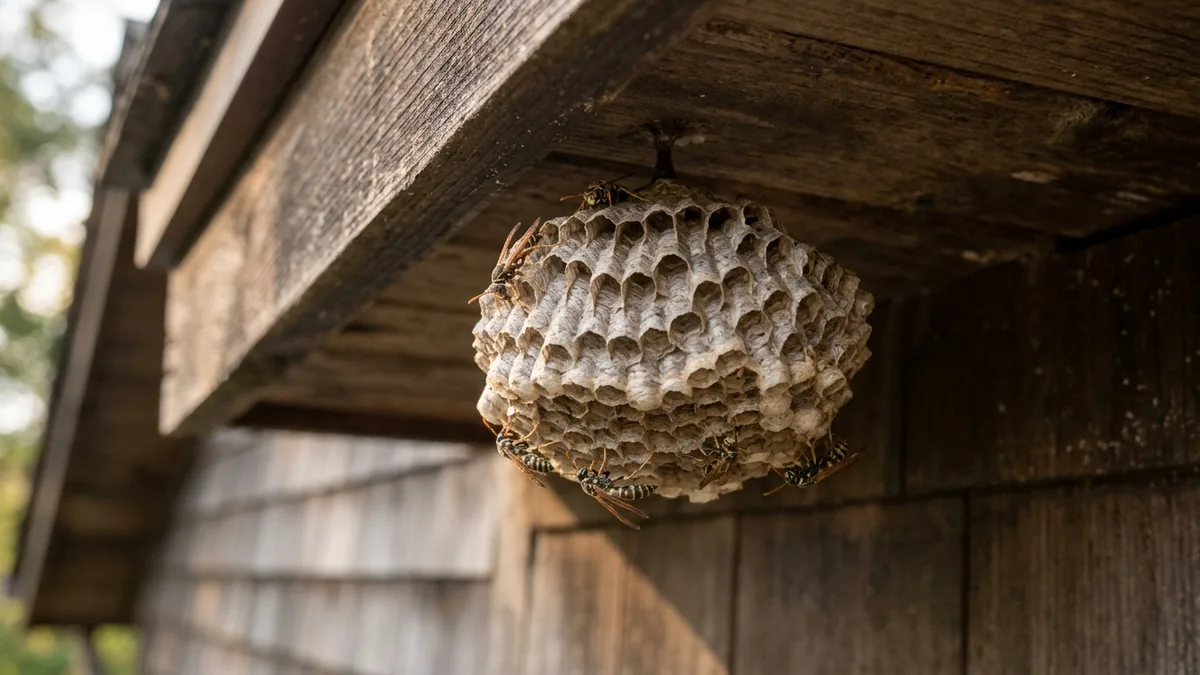
- Paper waspsLong dangling legs, a very thin waist, reddish-brown to black body. The European paper wasp has yellow and black markings and gets mistaken for a yellow jacket. The nest is a single gray comb shaped like an upside-down umbrella, with the open cells facing down and no outer shell. NC State Extension puts a mature colony at about 6 to 8 inches across with several dozen wasps (NC State Extension).Usually the only nest a homeowner should consider treating.
- Yellow jacketsShorter and stockier than paper wasps, bright yellow and black, with legs tucked in when they fly. They nest in hidden cavities: old rodent burrows in the lawn, under landscape timbers and splash blocks, in stone walls, crawlspaces, attics and behind siding. All you see is a hole with a steady stream of traffic. By fall a colony can hold 600 to 800 workers.The most defensive of the group. Ground and wall nests are usually a pro job.
- Bald-faced hornetsBlack and white, bigger than yellow jackets. They build a gray, football-shaped paper nest hanging from a tree branch, a shrub or the side of a building, sometimes hidden in thick leaves until fall. A single nest can hold hundreds of hornets.Never break the paper shell. Call a pro for large or high nests.
- European hornetsBrownish red with a dull yellow abdomen, about 1.5 inches long. They nest in hollow trees, sheds, attics and wall voids, and fly at night toward lit windows. Colonies run 300 to 500 workers and sometimes reach 1,000.Nests in walls need a professional.
- Honey bees: do not kill themFuzzy, golden brown, rounder than any wasp. A cluster of thousands of bees on a branch is a swarm looking for a new home, and it usually moves on within hours or days. Bees flying in and out of a wall where they have built wax comb are an established colony. NC State’s pollinator program says honey bees very rarely nest in the ground, so a ground nest is almost certainly yellow jackets (NC State Extension, “Help, I Have Bees”).Call your county extension office or state beekeepers association for a local beekeeper. Many collect swarms for free.
Spraying a honey bee colony in a wall also backfires: the dead colony leaves honey and wax that ferment and damage the wall. Bees and comb both need removing, which is a beekeeper’s job.
Where wasp nests hide, roof included↑ Contents
Paper wasps want shelter from rain and a surface to hang from. Check under eaves, gutters, deck railings, shutters, porch lights, grill lids, mailboxes and patio furniture, plus sheds.
A wasp nest in the roof usually means one of three things. Paper wasps hanging under the soffit or fascia are easy to see. Yellow jackets or hornets slipping through a gap in the soffit, a vent screen, or under a ridge cap are building inside the attic or roof void, where you only see the entry point. Those hidden nests are not DIY territory: you cannot see the nest, and the entry is up a ladder.
Yellow jackets also nest at ground level: in the lawn, at the base of shrubs, in rotted stumps and in the hollow cores of cinder blocks.
Timing matters too. Colonies start in spring with a single queen and a nest the size of a walnut. They peak in late summer and early fall, which is when most people finally notice them. In cold-winter states the colony dies off in late fall, and the old nest is not reused the next year (UK Entomology). So a nest found in late October, away from doors and paths, can often just be left alone until a hard frost finishes it.
DIY or pro: how to decide↑ Contents
You can reasonably handle it yourself when all of these are true:
- It is a paper wasp nest, open comb, no paper shell.
- It is smaller than your palm, roughly 4 inches or less.
- You can reach it with spray while standing on the ground.
- Nobody involved has a known sting allergy.
- You have a clear path to walk away, with no stairs, pool or clutter behind you.
Call a pest control professional when any of these apply:
- Yellow jackets nesting in the ground, a wall, an attic or a crawlspace.
- A bald-faced or European hornet nest of any real size.
- The nest is high enough that you would need a ladder. Getting stung while on a ladder is how a sting becomes a fall.
- The nest is inside the roof or behind siding, so you only see the entrance.
- Someone in the house is allergic, or you have young children or pets who cannot be kept away.
- You treated once and the activity has not dropped after a couple of days.
The University of Kentucky guide calls yellow jacket treatment a high-risk job and sends hard-to-reach, ladder-height and hornet nests to professionals.
How to get rid of a small wasp nest yourself↑ Contents
This is the method for a small, exposed paper wasp nest you can reach from the ground. Read the whole thing before you start.
-
Buy a wasp and hornet aerosol and read the label
Choose a product labeled for wasps and hornets; these cans reach about 20 feet. Read the whole label, including where it may be used and how long to keep kids and pets away. The label is the legal set of instructions, and the EPA’s “Read the Label First” guidance also asks you to keep pesticides in their original container and buy only what you need.
Never spray into the wind or toward your face.
-
Pick the right time: dusk or early morning
Wasps are home and sluggish when it is cool and dim, which is why NC State recommends evening treatment. Turn off nearby porch lights, which draw wasps toward you.
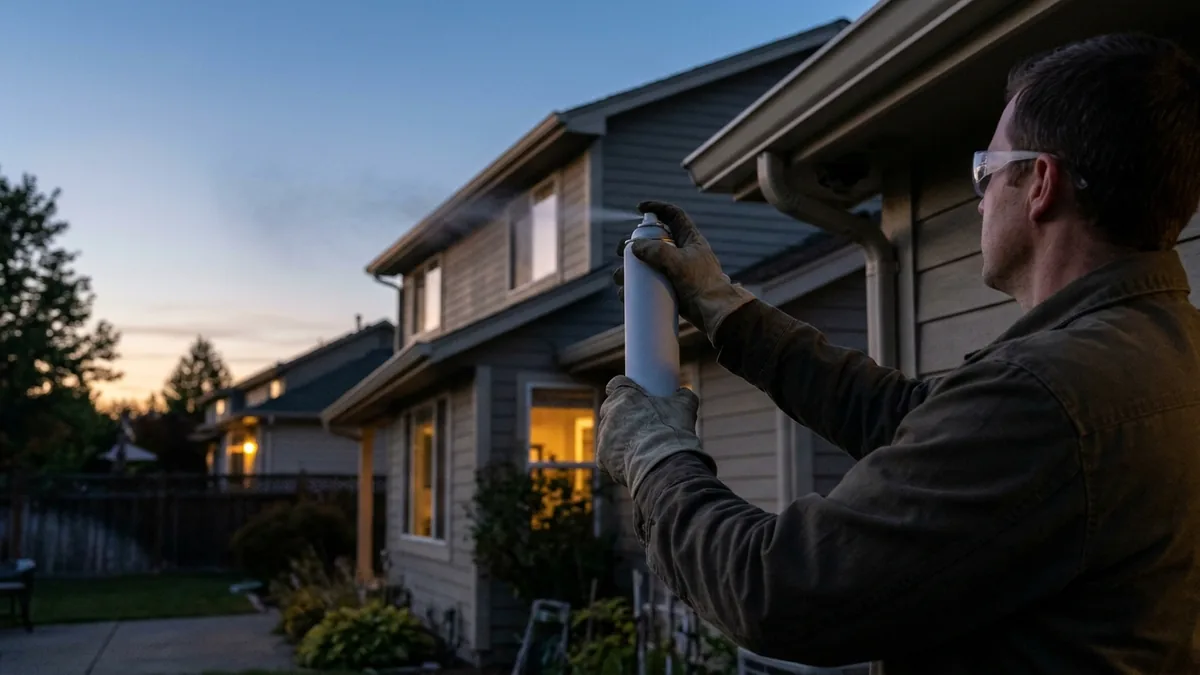
Wear full protective clothing and treat the nest at dusk, when the wasps are inside. -
Dress for it
Long sleeves, long pants tucked into socks, closed shoes, gloves, a hat and safety glasses. Tape or rubber band your cuffs. Skip perfume, scented lotion and hair products. If you need light, set a flashlight on the ground and angle it beside the nest, not straight at it.
-
Plan your escape route
Decide where you will walk: away from the nest, toward an open door, with no hoses, toys or steps in the way.
-
Spray from the ground, then walk away
Stand to the side of the nest, not directly under it, at the distance the label gives. Soak the comb for several seconds until it drips, then walk calmly and steadily to your exit. Do not stand and watch. Never spray from a ladder. If the nest is too high to hit from the ground, it is a pro job.
-
Wait, check, then knock it down
Leave it for a day or two. If wasps are still flying in, repeat the next evening. Once it is quiet, knock the nest down with a long-handled broom or scraper, bag it, and throw it in the trash.
Never do these: pour gasoline or other fuel into a nest, set a nest on fire, or flood a ground nest with a hose. Fuel is a fire and groundwater hazard, burning a nest near a house is how house fires start, and water just sends angry wasps out of the hole at you. Both university guides cited here warn against pouring fuel into nests, and Kentucky notes that a garden hose rarely works and leads to multiple stings.
Yellow jacket nests in the ground and walls↑ Contents
A yellow jacket nest in the ground can hold hundreds of workers in a chamber far larger than the small entrance hole you see. Step on it and they come out fast and in numbers. Flag the spot from a distance, keep people away, and call a pro.
For nests in walls, attics, soffits and roofs, the key rule is simple: do not seal the entrance. Plugging it does not trap the colony; they can chew inward and come out inside the house. Leave the hole open until the colony is dead. Pros usually use an insecticide dust, which reaches deeper into a cavity than spray, and patch only once activity stops.
A ground nest at the far edge of the yard in late September can simply be fenced off until the first hard freeze kills it.
If you get stung↑ Contents
If several wasps come at you, do not swat: get indoors, and do not jump into a pool. For an ordinary sting, CDC NIOSH advises:
- Have someone stay with the person for a while to watch for an allergic reaction.
- Wash the sting with soap and water.
- If a stinger is left in the skin (honey bees leave theirs, wasps usually do not), scrape it out sideways with a fingernail or a card. Do not squeeze it or use tweezers.
- Apply ice to cut the swelling, and try not to scratch.
- An oral antihistamine can help with itching. Follow the package directions.
Pain, redness and local swelling are normal. Any warning sign from the first section means 911.
Keeping wasps from coming back↑ Contents
- Walk the house in early spring. A queen’s starter nest is the size of a walnut with a few cells. Knocking it down in April is far easier than dealing with it in August.
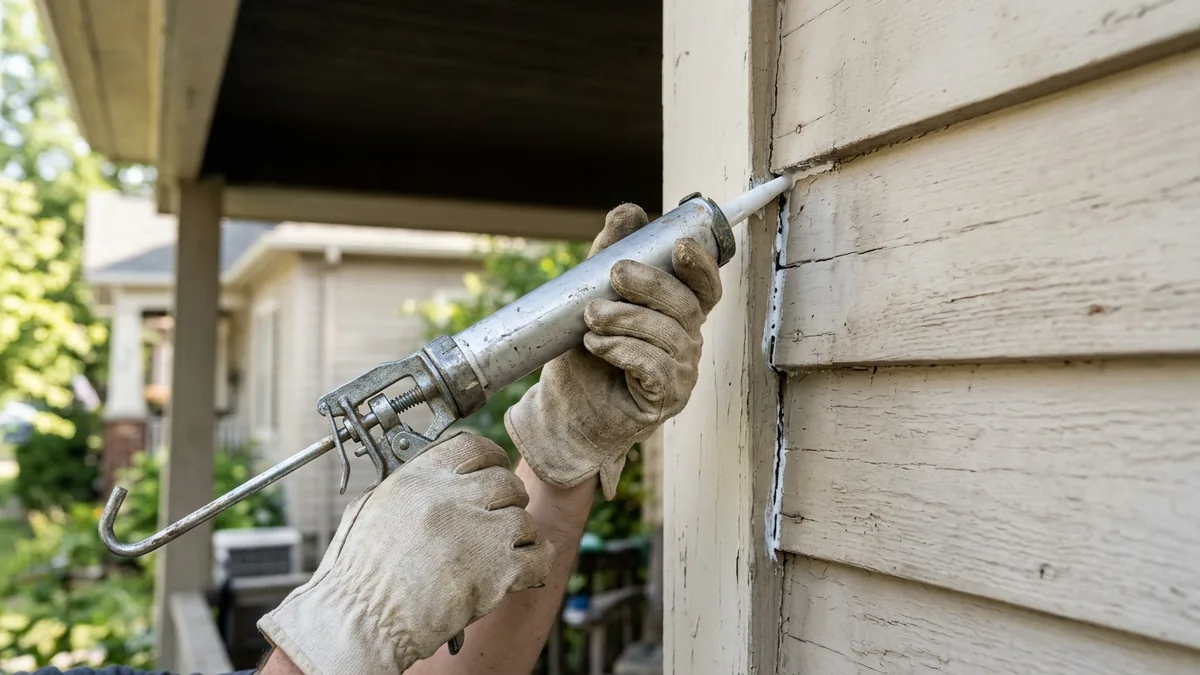
- Screen attic and soffit vents and fill gaps in siding, trim and around pipes in late fall or winter, once the colonies are dead.
- Fill old rodent burrows in the lawn and keep a thick, healthy turf. Bare, sandy patches attract ground nesters.
- Manage food outdoors. Keep drinks covered, check cans before you sip, pick up fallen fruit, and use trash cans with tight lids. Late-season yellow jackets come for sugar and protein.
- Don’t count on traps. They catch wasps but rarely reduce late-season activity.
Wasp nest FAQ↑ Contents
What is the best time of day to remove a wasp nest?
Dusk or very early morning, when it is cool and the wasps are on the nest and slow. Turn off nearby lights first. Midday on a hot afternoon is the worst time: the colony is at full activity and foragers will return to find you.
How do I know if a nest is wasps or bees?
Wasps are smooth, shiny and narrow-waisted. Honey bees are fuzzy and golden brown. Paper wasp nests are open gray combs; honey bees build wax comb in a sheltered cavity or hang in a large cluster when swarming. If the insects come out of a hole in the ground, they are almost certainly yellow jackets, not honey bees.
Should I remove a wasp nest in the roof myself?
Only if it is a small, open paper wasp nest you can spray from the ground. If wasps are going into a gap in the soffit, roof or siding, the nest is hidden in a void and you would need a ladder. Call a pest control pro, and do not seal the entry hole.
Will a wasp nest go away on its own?
In cold-winter areas, yes. The workers and the old queen die in late fall, only new queens survive the winter, and they build fresh nests in spring. If the nest is out of the way and nobody is allergic, waiting it out is a valid choice.
What do I do about a swarm of honey bees in my tree?
Leave it alone and call your county extension office or local beekeepers association quickly. A swarm often moves on within a day or two, and local beekeepers will frequently collect it at no charge.
Dealing with a wasp nest comes down to knowing what you are looking at. A small, open paper wasp nest you can reach from the ground can be sprayed at dusk with a labeled aerosol and knocked down a day or two later. Yellow jackets in the ground or walls, hornet nests, anything in the roof or up a ladder, and any household with a sting allergy are jobs for a professional. Honey bees go to a beekeeper. And if a sting brings on breathing trouble or swelling in the face or throat, call 911.
Sources: University of Kentucky Entomology, Controlling Wasps, Hornets and Yellowjackets, NC State Extension, Non-Honey Bee Stinging Insects, CDC NIOSH, Insects and Scorpions, U.S. EPA, Read the Label First.


