A dishwasher not draining usually announces itself the worst way: you open the door after a cycle and find an inch of gray, greasy water sitting over the filter. The good news is that the cause is almost always a blockage you can reach yourself. A packed filter, a kinked hose, a clogged sink drain or a new garbage disposal with its plug still in place account for most cases. This guide goes through the checks in the order an appliance technician would, from the free and fast ones to the point where you should stop and book a repair.
If your dishwasher is not draining, first rule out an interrupted cycle and run Cancel/Drain. Then cut the power, bail out the standing water and clean the filter. Next, check the drain hose for kinks, confirm the high loop or air gap, clear the sink drain, and remove the disposal knockout plug if the disposal is new. A humming pump that moves no water needs a technician.
How much standing water is normal?↑ Contents
Before you pull anything apart, make sure there is actually a problem. Every dishwasher keeps a little water in the sump, the low well under the filter, to keep the seals wet. Bosch says it is normal to see up to about two cups of water in the bottom after a cycle. A few droplets on the tub walls are also normal on condensation-dry models.
Water covering the filter, a sour smell or gritty dishes are not normal. Those mean the water is not leaving, and the steps below apply.
Read the symptoms before you start↑ Contents
Run a short rinse or drain cycle and stay next to the machine for the drain portion. What you hear tells you where to look first.
- The pump runs normally, but water stays in the tubThe pump is fine. Something downstream is blocked: the filter, the hose, the air gap, the disposal or the sink drain (steps 5 to 8).
- A steady hum with no water movingThe pump is getting power but the impeller cannot turn. Debris in the pump housing is the usual reason (step 9).
- Grinding or rattling during the drainSomething hard, often a piece of glass or a fruit pit, is in the pump area. Do not keep running cycles (step 9).
- Water backs up into the sink or spits out of the air gapThe blockage is past the dishwasher, in the air gap, the disposal or the sink drain (steps 6 to 8).
- Silence during the drain portionNo pump sound at all points to an electrical or control problem, such as the pump motor, a door switch or the control board (see the pro section).
How to fix a dishwasher that won’t drain, step by step↑ Contents
Work in order. The first five steps fix most cases and need nothing more than towels, a cup, a bucket and a soft brush. Keep a flashlight and a pair of work gloves nearby for the later steps.
-
Rule out an interrupted cycle
The drain happens at the end of each wash and rinse phase. If someone opened the door mid-cycle, a power blip reset the machine, or a child pressed a button, the cycle can stop with the wash water still inside. Close the door firmly until it latches and check the display for a paused cycle.
-
Run Cancel or Cancel/Drain
Most dishwashers have a way to end the cycle and pump out the water. On many models it is a button labeled Cancel or Cancel/Drain; on others you hold Start or Reset for a few seconds. Your owner’s manual gives the exact method. Let it run for about two minutes with the door closed and listen for the pump. If the water leaves, run a short rinse to confirm, and you may be done. If the pump runs and the water stays, the problem is a clog.
-
Turn the power off before you work inside
From here on your hands go into the tub and under the sink. Whirlpool’s own guide says to turn off power at the circuit breaker and not rely on the control panel alone. A plug-in model can simply be unplugged under the sink. Close the water supply valve under the sink as well, usually on the hot water line.
-
Bail out the standing water
Lay old towels on the floor in front of the door. Pull out the lower rack, then scoop the water into a bucket with a plastic cup. When the cup no longer reaches, finish with a turkey baster, a large sponge or a wet/dry vacuum. Pour the water into a toilet, not the kitchen sink, since the sink drain may be the very thing that is clogged.
Do not pour chemical drain openers into the dishwasher. They can damage the pump seals and plastic parts, and they leave you working with your hands in a caustic solution.
-
Clean the filter assembly
This is the fix in a large share of cases. Bosch says the most common reason a dishwasher won’t drain is food debris clogged in the filter or the water pump. On most modern machines, the filter is a cylinder in the floor of the tub. Twist it counterclockwise a quarter turn and lift it out, then lift out the flat mesh screen underneath if your model has one.
Rinse both parts under warm running water and scrub them with a soft brush and a drop of dish soap. Skip scouring pads, which can tear the mesh. Shine a flashlight into the opening and pick out anything left in the sump: seeds, labels, toothpicks, bits of eggshell. GE also points to paper or other objects blocking the sump at the rear of the tub. Set the flat screen back flat, then twist the cylinder clockwise until it locks. A filter that sits loose lets debris straight into the pump.
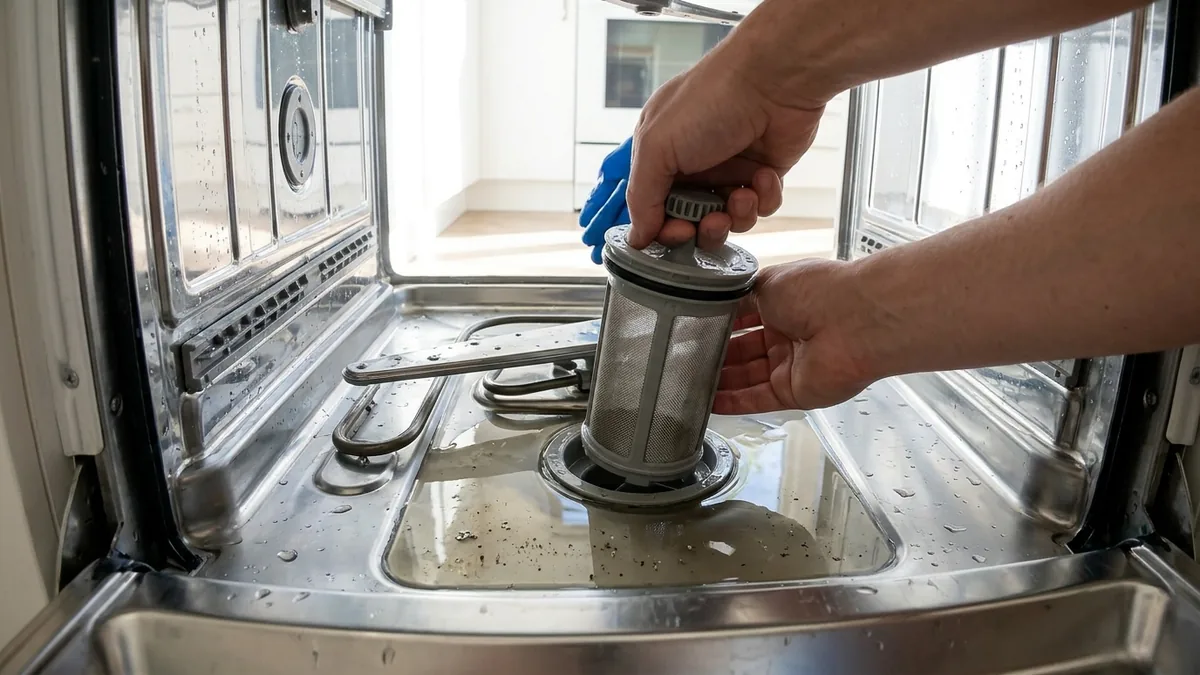
Twist out the cylindrical filter and rinse it under warm water. -
Check the drain hose, the high loop and the air gap
Open the sink cabinet and follow the ribbed drain hose from the dishwasher to where it connects to the disposal or the sink drain. Look for a kink, a section crushed behind storage bins, or a sag that holds water. Straighten anything you find.
Next, check the routing. The hose has to rise in a high loop fastened up near the underside of the countertop, or pass through an air gap, the small chrome cap on the sink deck. Either one keeps dirty sink water from flowing back into the dishwasher. GE’s installation instructions, for example, call for the loop to reach at least 32 inches from the floor and the hose not to go higher than 48 inches. If yours runs flat, pull the slack up and secure it with a zip tie or a bracket.
If you have an air gap, pull off its cap and clean out the inside with a bottle brush. Water spitting out of the air gap during a drain is the classic sign of a clog after it, in the hose to the disposal or in the disposal itself.
To clear the hose, put a pan under the connection, loosen the clamp and pull the hose off. Flush it with warm water, or work a flexible plastic drain snake through it. Sharp metal tools can puncture it.
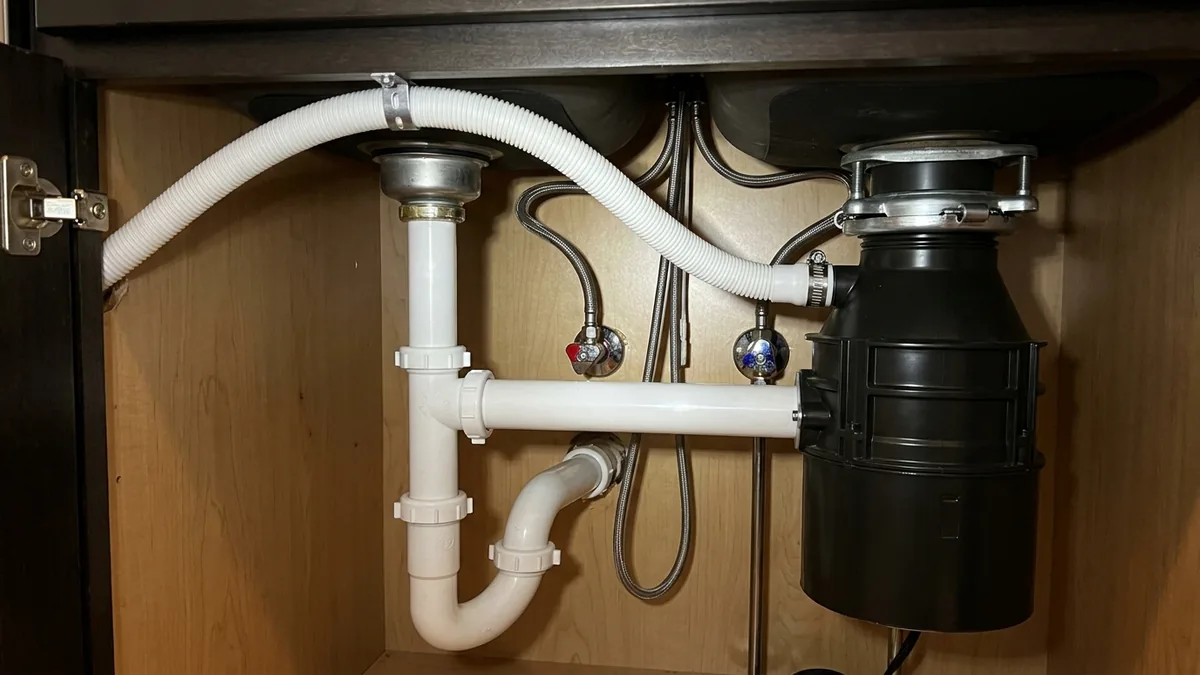
The drain hose should rise in a high loop under the sink before it connects to the drain. -
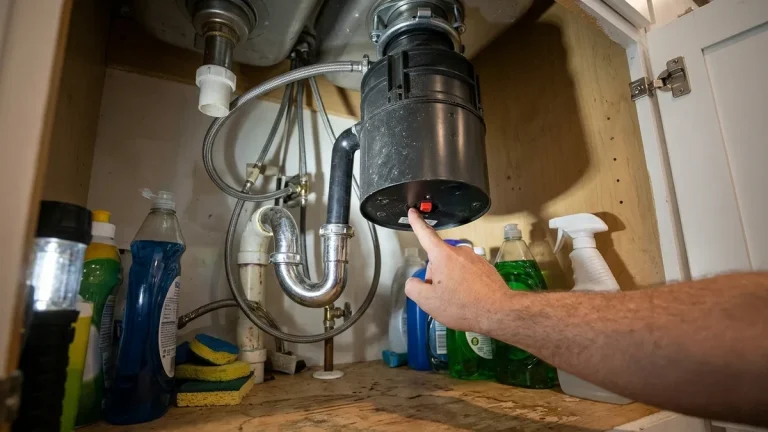
Remove the garbage disposal knockout plug
If the dishwasher stopped draining right after a new garbage disposal went in, this is almost certainly the cause. New disposals come with a solid plastic plug inside the dishwasher inlet, and it has to be knocked out during installation. GE’s instructions put it plainly: the dishwasher will not drain if the plug is left in place.
With the disposal unplugged or its breaker off, disconnect the dishwasher hose from the disposal. Whirlpool suggests a simple test: push a pencil into the inlet; if it goes in about 3 inches, the plug is already out. If it stops short, tap the plug out with a blunt screwdriver and a hammer, then reach inside the disposal (power still off) and remove the loose plug so it does not jam the grinder.
-
Clear a sink clog shared with the dishwasher
Your dishwasher drains into the same pipe as the kitchen sink. If the sink drains slowly, the dishwasher is pushing against the same clog. Run the disposal with cold water for 30 seconds to clear food sitting in the chamber. If the sink still drains slowly, plunge it (block the other bowl of a double sink with a wet rag, and clamp the dishwasher hose shut so you do not push the clog backward). Remove and clean the P-trap if plunging does not do it. Once the sink drains freely, run a Cancel/Drain again.
-
Check the drain pump for an obstruction
If the filter, hose and sink are clear and you heard a hum or a grinding sound, look at the pump. Under the filter there is usually a small cover over the pump inlet. Many Bosch models use a snap-in cover you lever up with a spoon; your manual shows the method for your machine. Bosch says to sponge out the standing water and remove debris from the pump, and warns that some debris may be sharp.
Glass shards: broken glass is the most common thing found jammed in a drain pump, and the pieces are small and hard to see in murky water. Wear cut-resistant or heavy work gloves, use a flashlight, and pick fragments out with needle-nose pliers rather than your fingers. Never reach into the pump with the power on.
With the cover off, you can often see the small plastic impeller. Turn it gently with a finger (gloved) or a wooden spoon handle. It should spin with light resistance. A blade that is cracked or will not turn after you clear the debris means the pump needs replacing. Put the cover and filter back, restore power and water, and run a short rinse cycle.
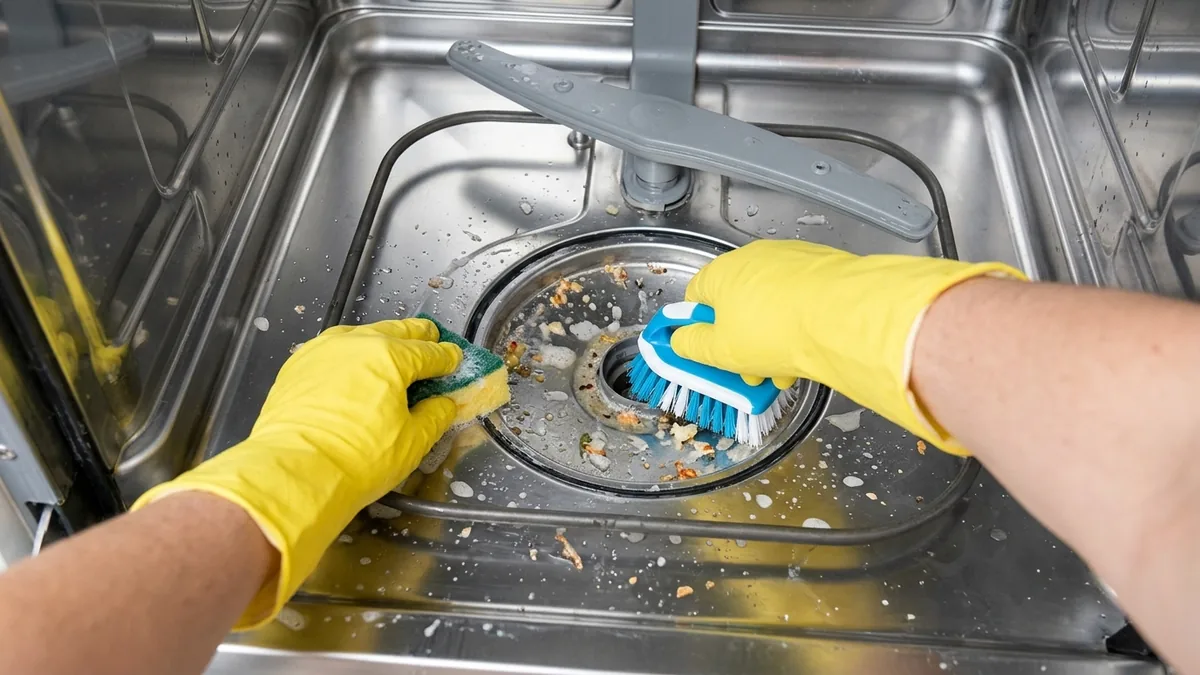
Clean food debris from the sump area under the filter with a soft brush.
When it is the pump or control board↑ Contents
If you have gone through every step and the dishwasher still will not drain, the problem has moved from plumbing to parts. Whirlpool notes that no pump sound during the drain points to an electrical or control issue, such as the door switch, the wiring, the pump itself or the control board. Testing those means opening the lower panel and using a multimeter on 120-volt circuits, and that is a job for an appliance technician.
Call for service if any of these apply:
- The pump hums but water does not move after you cleared the filter and pump inlet.
- You hear no pump sound at all during Cancel/Drain.
- The impeller is broken, or the pump grinds even with nothing visible inside.
- The display shows an error code your manual links to the drain system or the control.
- The breaker trips, you smell burning, or you see water leaking from under the machine.
- The dishwasher is still under warranty. Opening panels yourself can complicate a claim.
Before you call, note the model and serial number (on a label along the door edge or tub frame), any error code, and what you heard during the drain.
Prevention habits that keep it draining↑ Contents
Most drain problems build up slowly. A few habits keep them away:
- Clean the filter on a schedule. Once a month is a good rhythm for most households, more often if you wash a lot of pots or skip pre-rinsing. Bosch says regular maintenance like this should prevent the problem.
- Scrape, do not rinse. Scrape bones, seeds, rice, labels and toothpicks into the trash.
- Run the disposal before the dishwasher. A disposal full of food is a clog waiting for the dishwasher’s drain water.
- Run hot water at the sink first. A few seconds of hot water before you start a cycle helps grease move through the drain line instead of settling in it.
- Clean up broken glass right away. If a glass breaks in the dishwasher, pull the filter and check the sump before the next cycle.
Dishwasher not draining: FAQ↑ Contents
Why is there standing water in my dishwasher after a cycle?
A cup or two in the sump is normal. More than that usually comes from a clogged filter, a kinked or blocked drain hose, a clogged sink drain or garbage disposal, or an interrupted cycle. Clean the filter first; it is the fastest check and solves many cases.
How do I drain a dishwasher manually?
Turn off the power at the breaker, lay down towels, remove the lower rack and scoop the water into a bucket with a cup. Finish with a turkey baster, a sponge or a wet/dry vacuum. Then clean the filter before you run another cycle.
How do I make my dishwasher drain without calling a repairman?
Run Cancel/Drain, then clean the filter, straighten and flush the drain hose, clean the air gap, clear the sink drain and run the disposal. If the disposal is new, remove the knockout plug. These steps fix most drain problems without any parts.
Can a clogged sink cause a dishwasher not to drain?
Yes. Most dishwashers drain into the sink tailpiece or the disposal, so they share the same pipe and trap. If the sink drains slowly, the dishwasher water has nowhere to go. Clear the sink clog and the dishwasher usually drains again.
Should I put vinegar or baking soda in a dishwasher that won’t drain?
Not to fix a clog. Vinegar and baking soda do not dissolve food solids or a stuck plug. Remove the water and clean the filter and hose by hand. Once it drains properly, you can use a dishwasher cleaner as directed on its label for routine freshening.
A dishwasher not draining is nearly always a blockage, and you can usually find it in under an hour. Rule out an interrupted cycle, run Cancel/Drain, cut the power, bail out the water and clean the filter. Then follow the drain path: hose, high loop or air gap, disposal knockout plug, sink drain, pump inlet. If the pump hums without moving water or stays silent, stop there and call a technician with your notes ready.
Sources: Bosch: dishwasher not draining, Whirlpool: dishwasher not draining, Whirlpool: newly installed dishwasher not draining, GE Appliances dishwasher FAQs.