
When a GFCI won’t reset, the outlet is almost never “stuck” for no reason. Modern GFCIs are built to refuse a reset when something is wrong: no power reaching them, a ground fault still on the line, or a device that has reached the end of its life. Work through the checks below in order and you will usually know which one it is in about ten minutes.
A GFCI that won’t reset usually has no power (a tripped breaker or another GFCI upstream that tripped), a ground fault that is still present (a plugged-in appliance or moisture in an outdoor box), or it has failed. Unplug everything, check the breaker, find and reset the first GFCI on the circuit, then replace the outlet if it still won’t latch.
Why a GFCI refuses to reset
↑ ContentsA ground fault circuit interrupter compares the current going out on the hot wire with the current coming back on the neutral. If a few milliamps go missing, through a wet appliance or through a person, it cuts power in a fraction of a second. The U.S. Consumer Product Safety Commission describes it as an inexpensive device designed to protect people from severe or fatal shocks.
GFCIs sold since the mid-2000s also have a lockout feature. Updates to the UL 943 standard that took effect in 2003 and 2006 pushed manufacturers toward devices that will not reset if they lose their protective function or if they are wired backwards. So a reset button that won’t stay in is often the outlet telling you exactly what it was designed to tell you.
Do these three checks first
↑ ContentsUnplug everything from the outlet
Also unplug anything on the other outlets in the same room or bathroom. A hair dryer, space heater or old extension cord on a downstream outlet can keep tripping the GFCI the instant you press reset.
Check the breaker panel
A GFCI with no power will not reset at all, and the button usually feels dead. Look for a breaker sitting in the middle position. Push it fully to OFF, then back to ON. Some panels also have GFCI breakers with their own test button.
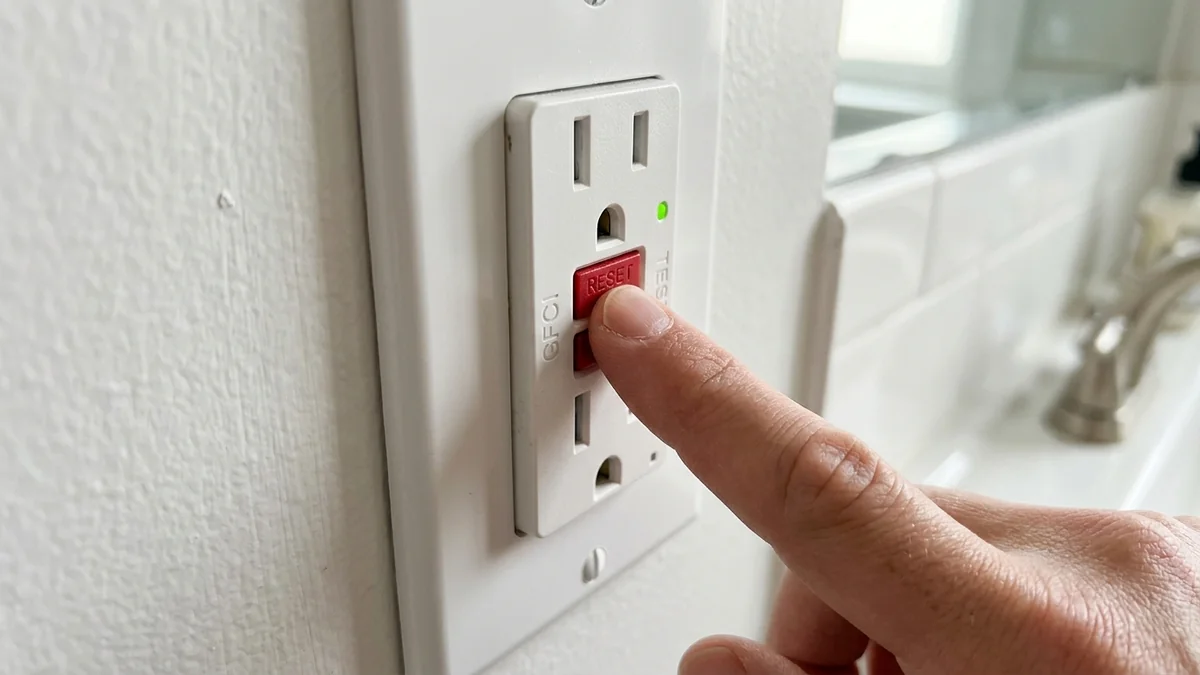
Press reset firmly and hold it for a second
Push straight in until you hear a click. On many models a green light comes on when it latches. A weak, sideways press is a surprisingly common reason a working GFCI “won’t reset.”
7 reasons a GFCI won’t reset, and the fix for each
↑ ContentsThere is no power at the outlet
Besides a tripped breaker, the circuit may run through a wall switch, a loose wire in another box, or a breaker that has failed. If the breaker is on and the button still feels limp, a plug-in tester on a nearby outlet on the same circuit tells you whether power is reaching that part of the house.
Another GFCI upstream tripped
One GFCI can protect several regular outlets “downstream” of it. If the outlet you are pressing is actually the second GFCI on the chain, it gets no power until the first one is reset. Check every GFCI nearby: bathrooms, kitchen, garage, basement, outside walls, and the laundry area. In older homes the master GFCI is often in the garage or behind a fridge.
The ground fault is still there
If the GFCI resets with nothing plugged in but trips again the moment you plug in one appliance, the appliance is leaking current. Common culprits are hair dryers, space heaters, old refrigerators and anything with a heating element. Retire it or have it repaired.
Moisture in an outdoor or bathroom box
Rain, sprinklers, condensation and steam all find their way into boxes. Outdoor GFCIs often trip after a storm and refuse to reset until the box dries out. See the section on outdoor outlets below.
The GFCI is wired line and load in reverse
This one shows up after a DIY replacement. Incoming power must go to the LINE terminals and the downstream outlets to LOAD. Most current GFCIs will not reset at all when this is reversed. If the problem started right after someone swapped the outlet, this is the first suspect.
The GFCI has reached the end of its life
Many models run a self-test and show a solid or flashing red light when they can no longer protect you. A GFCI that trips with the TEST button but never resets, or that resets but does not trip on TEST, should be replaced.
A wiring fault inside the wall
Damaged insulation, a nail through a cable, or a neutral shared with another circuit can all cause a GFCI to trip instantly with nothing plugged in. This is a job for a licensed electrician.
GFCI won’t reset and the light is red or off
↑ ContentsThe lights are the quickest clue you have, but they are not standardized, so check the label or the maker’s sheet if you still have it. As a general guide:
| What you see | Most likely meaning | What to do |
|---|---|---|
| No light, button feels dead | No power reaching the outlet | Check breaker and upstream GFCIs |
| Solid red, will not reset | Device failed its self-test | Replace the GFCI |
| Flashing red | End of life or wiring fault on many models | Replace, and check wiring if new |
| Green light, then trips when you plug in | Ground fault in the appliance | Test the appliance on another GFCI |
| Resets, then trips at random | Moisture or intermittent fault | Dry the box, inspect cords, call a pro if it continues |
Outdoor GFCI won’t reset after rain
↑ Contents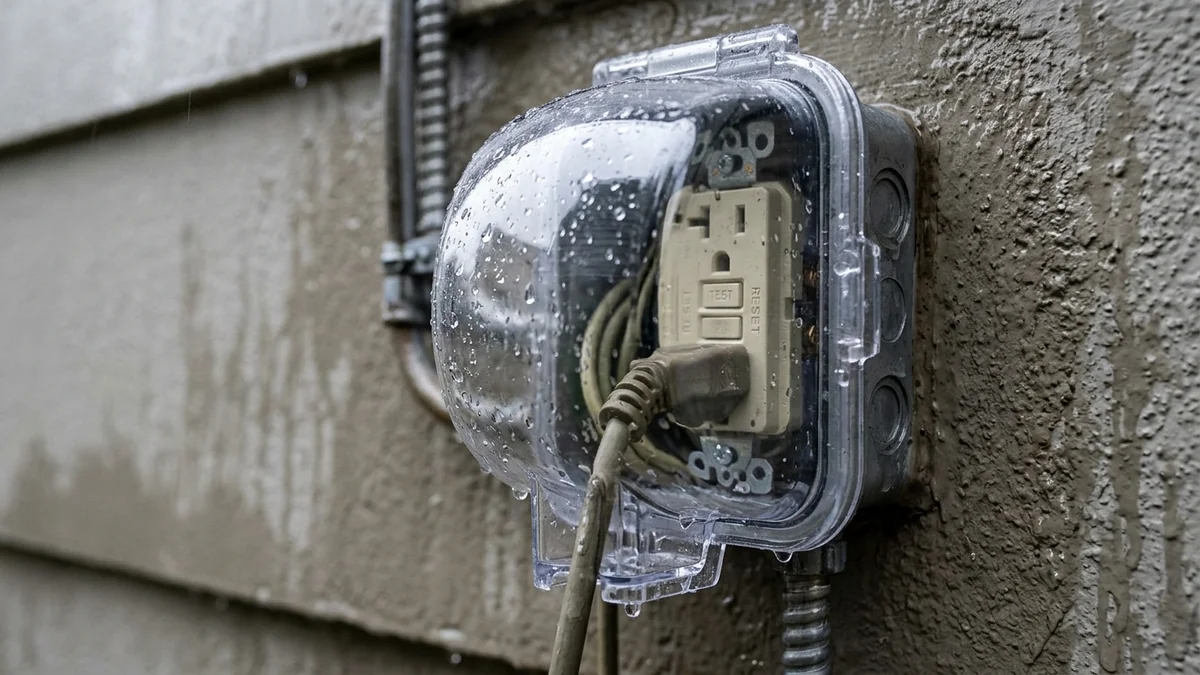
An outdoor GFCI that won’t reset after a storm usually has water in the box or in the cover. Leave it off and let it dry for a day; a lot of them come back once the moisture is gone. In freezing weather, condensation inside the box can do the same thing, which is one more reason to keep exterior outlets covered. If you are dealing with cold-weather plumbing problems too, our guide to frozen pipes covers the outside spigots that often sit right next to these outlets.
When it does come back, look at the cover. An “in-use” bubble cover that stays closed while something is plugged in keeps far more water out than a flat flip lid. If the outlet keeps tripping after every rain, have an electrician replace it with a weather-resistant (WR) GFCI and a sealed box.
Replacing a GFCI outlet: what to know before you start
↑ ContentsSwapping a GFCI is a common DIY job where local code and your own experience allow it, but it is also where the reversed line/load problem comes from. Before you buy a new one:
- Turn off the breaker and confirm the power is off with a non-contact voltage tester.
- Photograph the existing wiring and label which cable brings power in.
- Match the amperage rating (15 A or 20 A) to the circuit, and buy a weather-resistant model for outdoor or damp locations.
- If the old outlet has two cables and you are not sure which is LINE, leave the job to an electrician.
Some areas require a permit or a licensed electrician for any new electrical work. Check with your local building department if you are unsure.
How often should you test a GFCI?
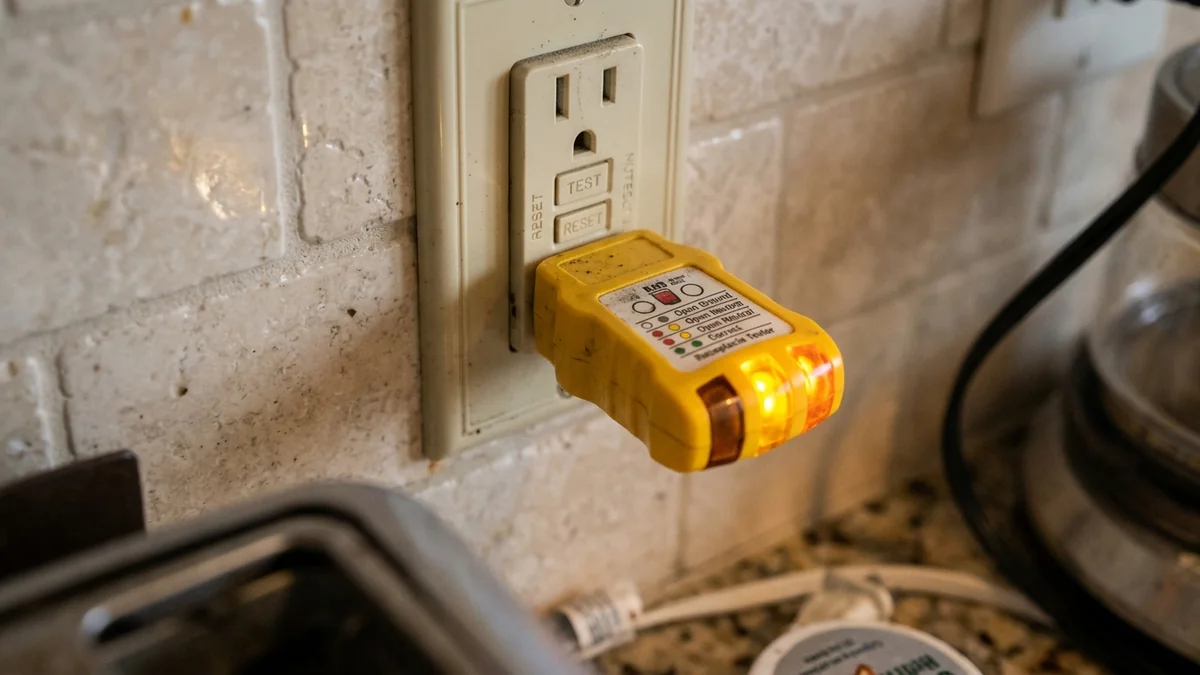
↑ ContentsThe CPSC recommends testing GFCIs monthly. Press TEST: the power should cut off and the reset button should pop out. Press RESET: power should come back. If TEST does nothing, the outlet is not protecting anyone, even though it may still deliver power. A plug-in GFCI tester is a cheap way to check that downstream outlets are actually protected.
Kitchens are a good place to start. The outlet that feeds a garbage disposal or dishwasher is often GFCI protected, and a tripped GFCI is one of the first things to rule out when either appliance suddenly goes silent.
When to call an electrician
↑ Contents- The GFCI trips instantly with nothing plugged in anywhere on the circuit.
- You smell burning, see scorch marks, or the outlet feels warm.
- Several outlets in different rooms are dead and you cannot find the GFCI that controls them.
- A newly installed GFCI will not reset and you are not sure how it was wired.
- The GFCI breaker in the panel keeps tripping.
GFCI won’t reset: FAQ
↑ ContentsCan a GFCI go bad without tripping?
Yes. A GFCI can keep delivering power while its protection has failed. That is why the monthly TEST button check matters. If pressing TEST does not cut the power, replace the outlet.
Why won’t my GFCI reset when there is no power?
Most GFCIs need power to latch. If the button will not stay in and nothing lights up, the problem is upstream: a tripped breaker, another GFCI, or a loose connection.
Can I reset a GFCI that keeps tripping by unplugging one thing?
Often, yes. If it resets with nothing plugged in, plug devices back in one at a time. The one that trips it has a fault and should not be used on any outlet until it is repaired.
How long do GFCI outlets last?
There is no fixed lifespan. Heat, moisture, power surges and frequent tripping all shorten it. Many electricians plan on replacing them every 10 to 15 years, sooner in outdoor and garage locations.
Is a tripping GFCI dangerous?
A tripping GFCI is doing its job. The danger is the fault that tripped it, or a GFCI that never trips. Do not replace it with a regular outlet to stop the tripping.
Sources: CPSC, GFCI Fact Sheet; CPSC, monthly GFCI testing guidance.
If your GFCI won’t reset, start with power and upstream outlets, then rule out a faulty appliance or moisture. When it still won’t latch, the outlet has done its last job and needs replacing, by you if you are confident with wiring or by an electrician if not.