A sump pump running constantly is either working very hard or not working right, and the first job is to tell which. During a heavy rain or a snowmelt, a pump that runs for hours can be completely normal. When the pit is nearly empty and the motor still hums, or the pump kicks on every minute in dry weather, something is wrong, and a pump that never rests will burn out much sooner.
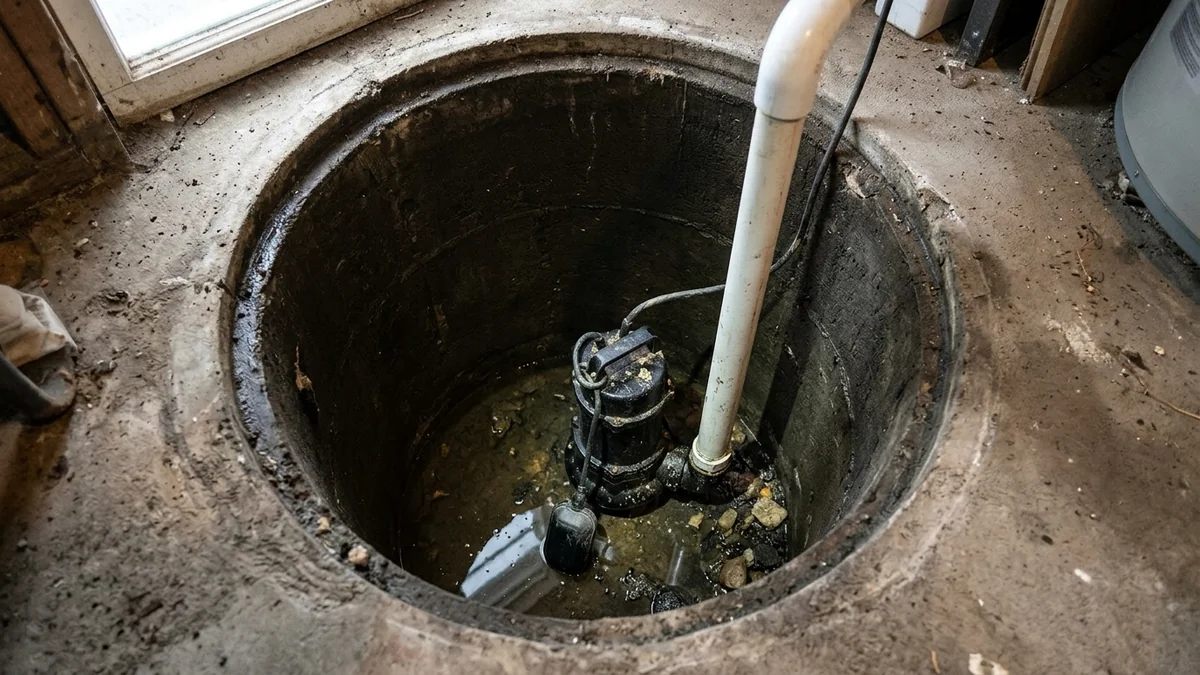
A sump pump that runs nonstop usually has a stuck float switch, a failed or missing check valve that lets water flow back into the pit, a frozen or clogged discharge line, or a pump too small for the inflow. Look into the pit: if it is low and the pump keeps running, free or replace the float switch; if water rushes back when it stops, replace the check valve.
Normal or a problem? Look in the pit
↑ ContentsTake off the pit cover with the pump running and watch for a minute or two.
| What you see | What it means |
|---|---|
| Water streaming in from the drain pipes, pump keeping up | High water table or heavy rain; the pump is doing its job |
| Pit almost empty, pump still running | Float switch stuck in the “on” position |
| Pump stops, then water gushes back down into the pit | Check valve failed or missing |
| Pump runs, water level barely drops | Clogged intake, frozen or blocked discharge, worn impeller or undersized pump |
| Short on and off cycles every few seconds | Float set too low, very small pit, or check valve problem |
6 causes of a sump pump that won’t stop
↑ ContentsStuck or tangled float switch
The float rises with the water and turns the pump on, then drops and turns it off. If it catches on the pit wall, the power cord or debris, it stays “on.” Unplug the pump, free the float, and make sure it can move through its full range without touching anything. If it moves freely but the pump still will not shut off, the switch has failed.
Failed or missing check valve
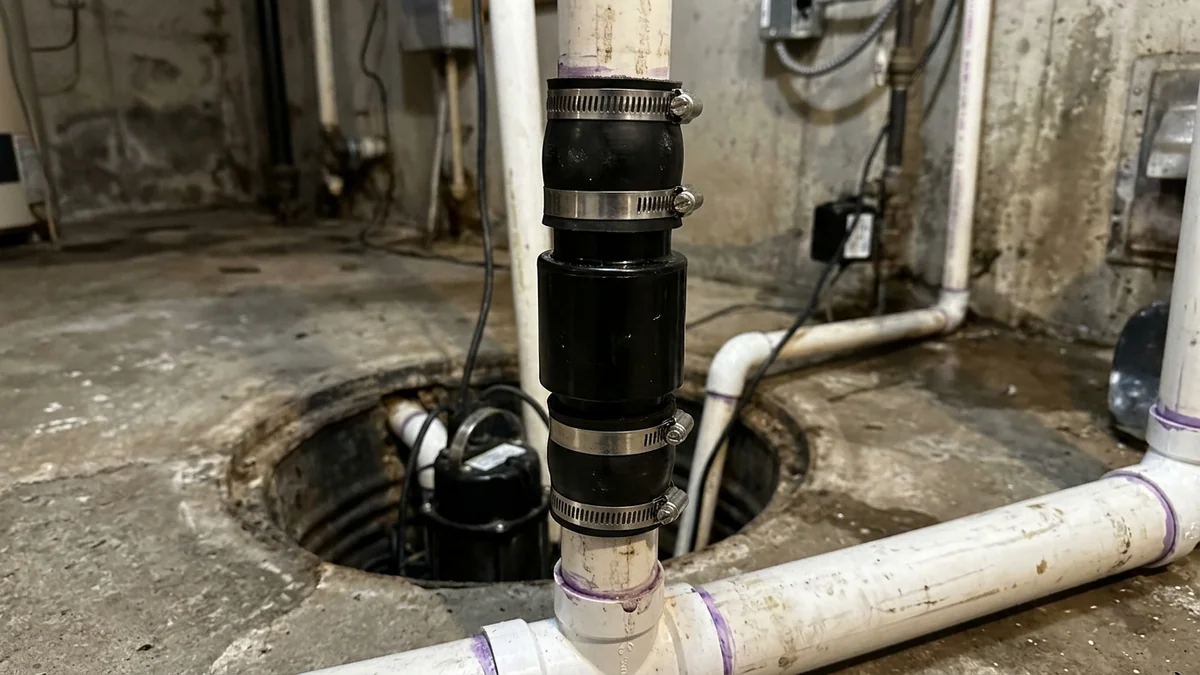
The check valve on the discharge pipe stops water in the pipe from falling back into the pit. When it fails, the same water gets pumped out and drains back again in a loop. Listen when the pump stops: a loud rush of water back into the pit gives it away. Check valves are an inexpensive replacement.
Frozen or clogged discharge line
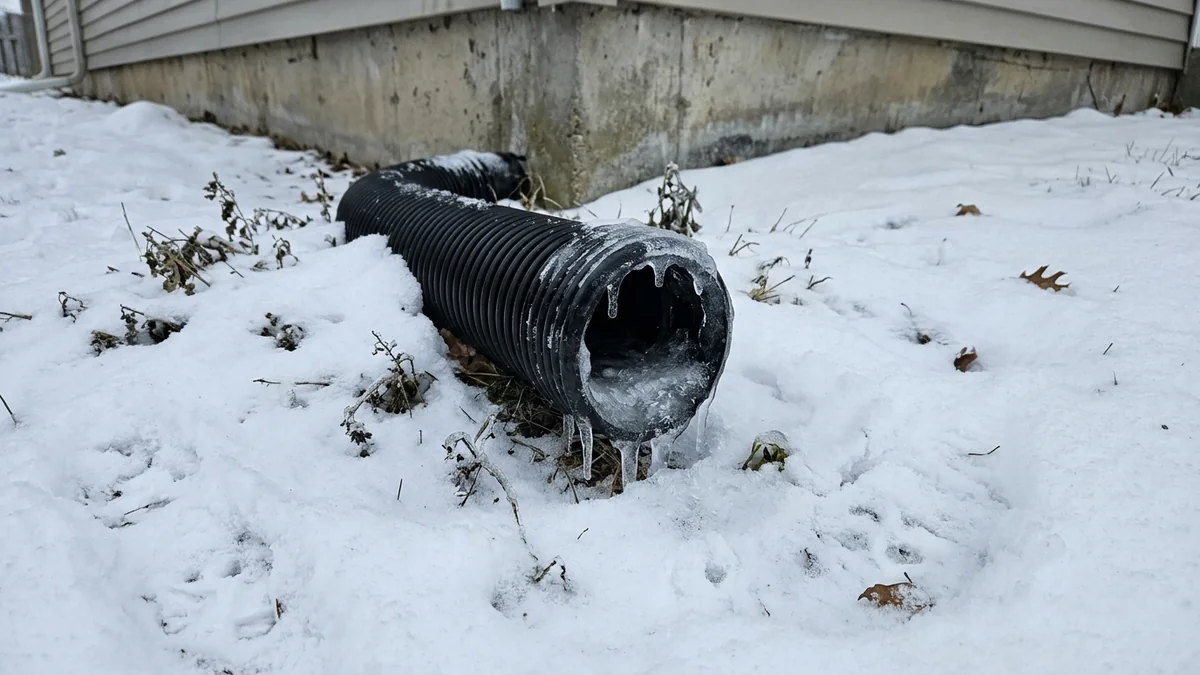
In winter, the outdoor end of the discharge line can freeze solid, and in fall it can clog with leaves. The pump then runs against a blocked pipe. Clear the outlet, keep it sloped so water drains out, and consider a freeze-resistant attachment. Our guide to frozen pipes covers safe thawing.
Clogged intake screen or worn impeller
Silt, gravel and debris can choke the intake or wear the impeller, so the pump moves less water per minute and needs to run longer. Unplug it, lift it out and clean the screen and base.
Pump too small or the wrong type
If the pit fills quickly even with a healthy pump, the inflow may simply be more than the pump can handle. A plumber can size a replacement by measuring how fast the pit fills.
Water that should not be there
Downspouts that empty right next to the foundation, ground that slopes toward the house, or a discharge outlet that dumps water where it soaks back down to the drain tile all send the same water around again.
How to test your sump pump
↑ ContentsFill the pit slowly with a bucket
Pour water in until the float rises. The pump should start at the set level.
Watch it shut off
The pump should lower the water and stop when the float drops, without running dry.
Listen at shutoff
A sharp clunk is normal for a swing check valve. Water rushing back means the valve is not sealing.
Check outside
Go to the discharge point and make sure water is flowing out freely and draining away from the house.
Sump pump running constantly in winter
↑ ContentsSnowmelt and winter rain can raise groundwater for weeks, so a busy pump in a thaw is not unusual. Frequent cycling in freezing weather with little meltwater, though, often points to a frozen discharge line or water recirculating from the outlet. Roof runoff matters too: if snow and ice are dumping water at the foundation, our article on ice dams explains how to manage it.
Add a backup before you need it
↑ ContentsFEMA calls sump pumps an excellent defense against basement seepage and flooding and recommends choosing one with battery-operated backup in case the power goes out. A pump that runs constantly is also more likely to fail during the next storm, so a battery backup or a high-water alarm is worth considering now.
Repair or replace?
↑ Contents- Repair when the problem is a float, check valve, clogged screen or discharge line and the pump is otherwise healthy.
- Replace when the motor runs hot, smells burnt, hums without pumping, or the pump is old and has been running nonstop for a long time.
- Many pumps have a built-in float switch, so a failed switch can mean replacing the whole pump.
When to call a plumber
↑ Contents- Water is rising in the pit faster than the pump can remove it.
- The pump hums but does not move water, or trips the breaker.
- You need a larger pump, a second pump or a battery backup installed.
- Groundwater or drainage problems around the foundation need regrading or new drain lines.
Sump pump running constantly: FAQ
↑ ContentsIs it normal for a sump pump to run every few minutes?
During heavy rain or snowmelt, yes. In dry weather, frequent cycling usually points to a float set too low, a small pit or a check valve letting water flow back.
Can a sump pump run too much?
Yes. Constant running wears out the motor and switch. Find the cause and consider a backup pump.
Why does my sump pump run when it has not rained?
A high water table, a nearby leak or irrigation, a stuck float or a failed check valve are the usual reasons.
How do I know if my check valve is bad?
If you hear and see water rushing back into the pit when the pump shuts off, or the pump restarts very quickly, the valve is not sealing.
How long do sump pumps last?
It depends on how hard they work. Pumps that run often wear out faster, so test yours each season and replace it when it struggles.
Sources: FEMA, Protect Your Home From Future Flooding.
When your sump pump runs constantly, look in the pit first: a low pit points to the float switch, water rushing back points to the check valve, and a slow drop points to the discharge line or the pump itself.